Jianshui · old town
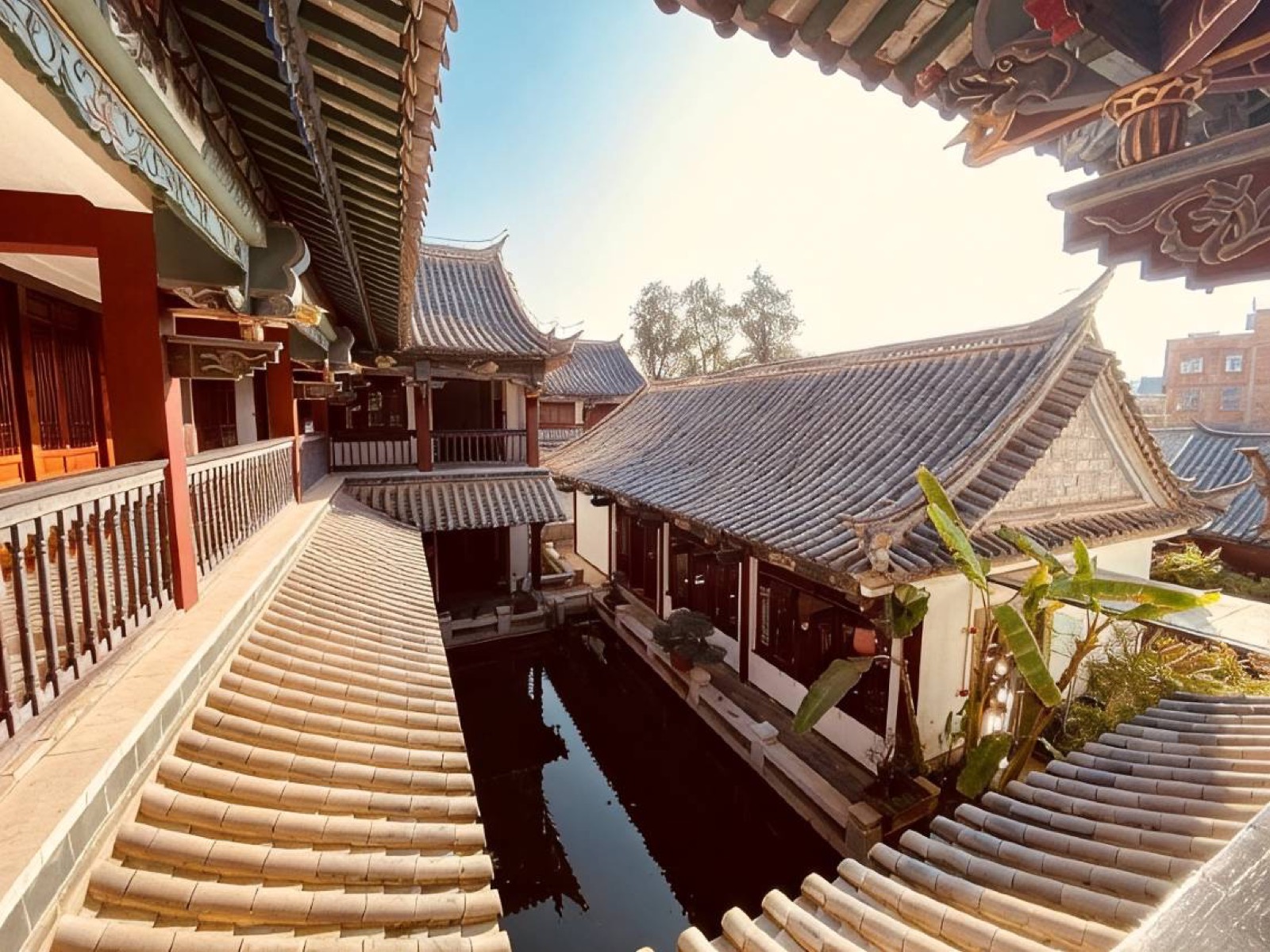
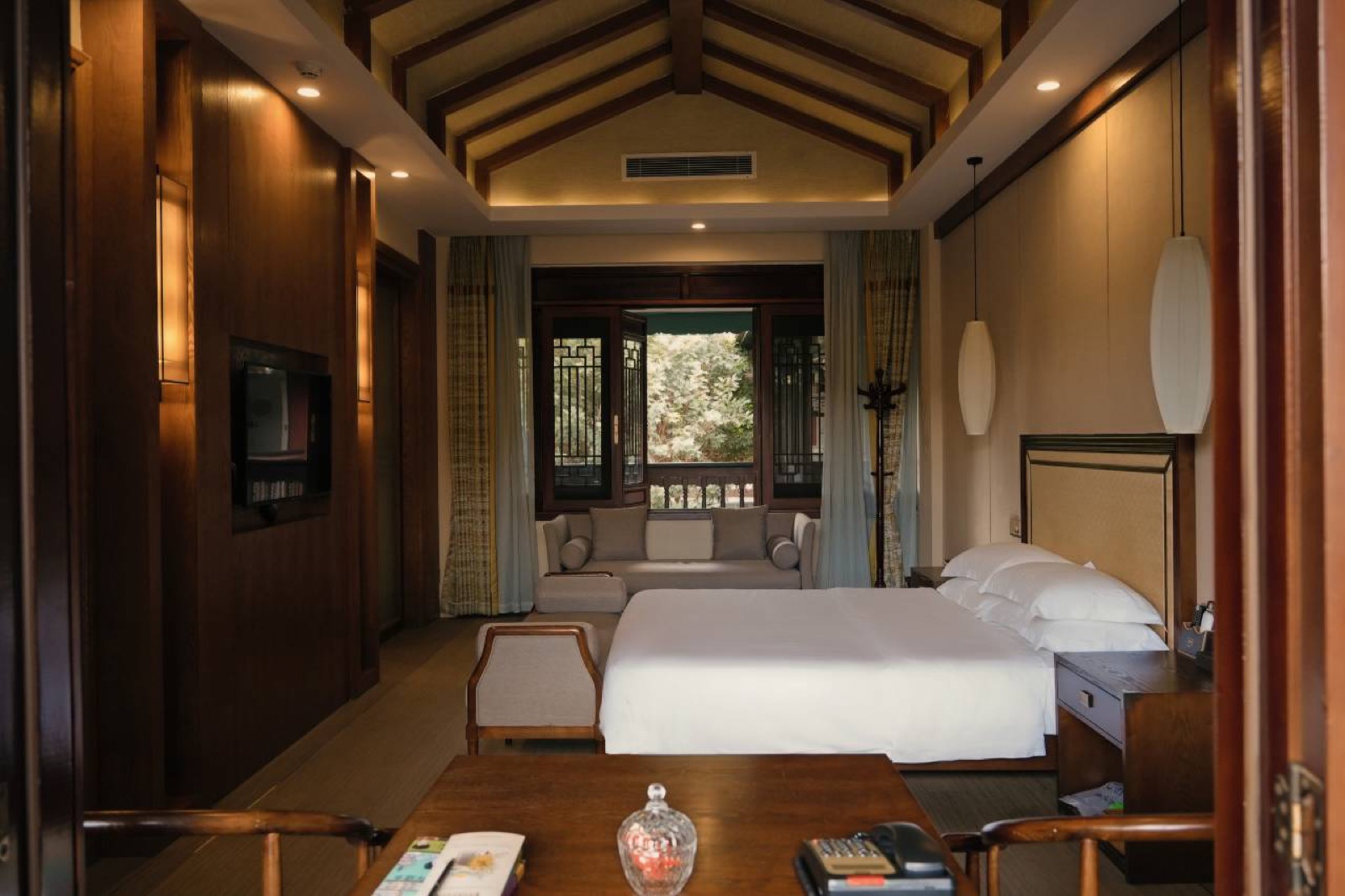
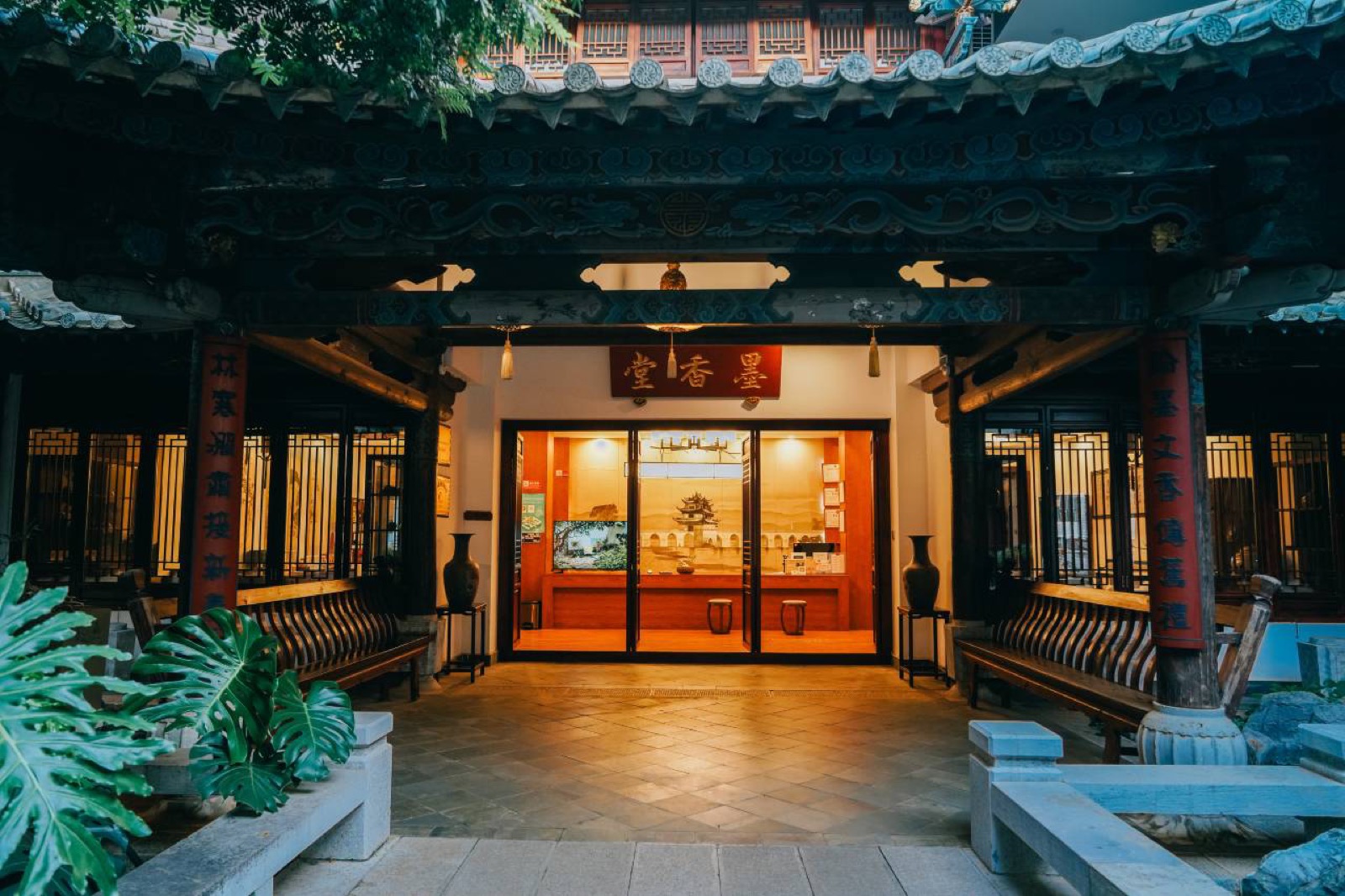
Three garden courtyards and a still reflecting pool inside the old town, with the tofu grills a short walk through the lanes. Two nights in Jianshui.

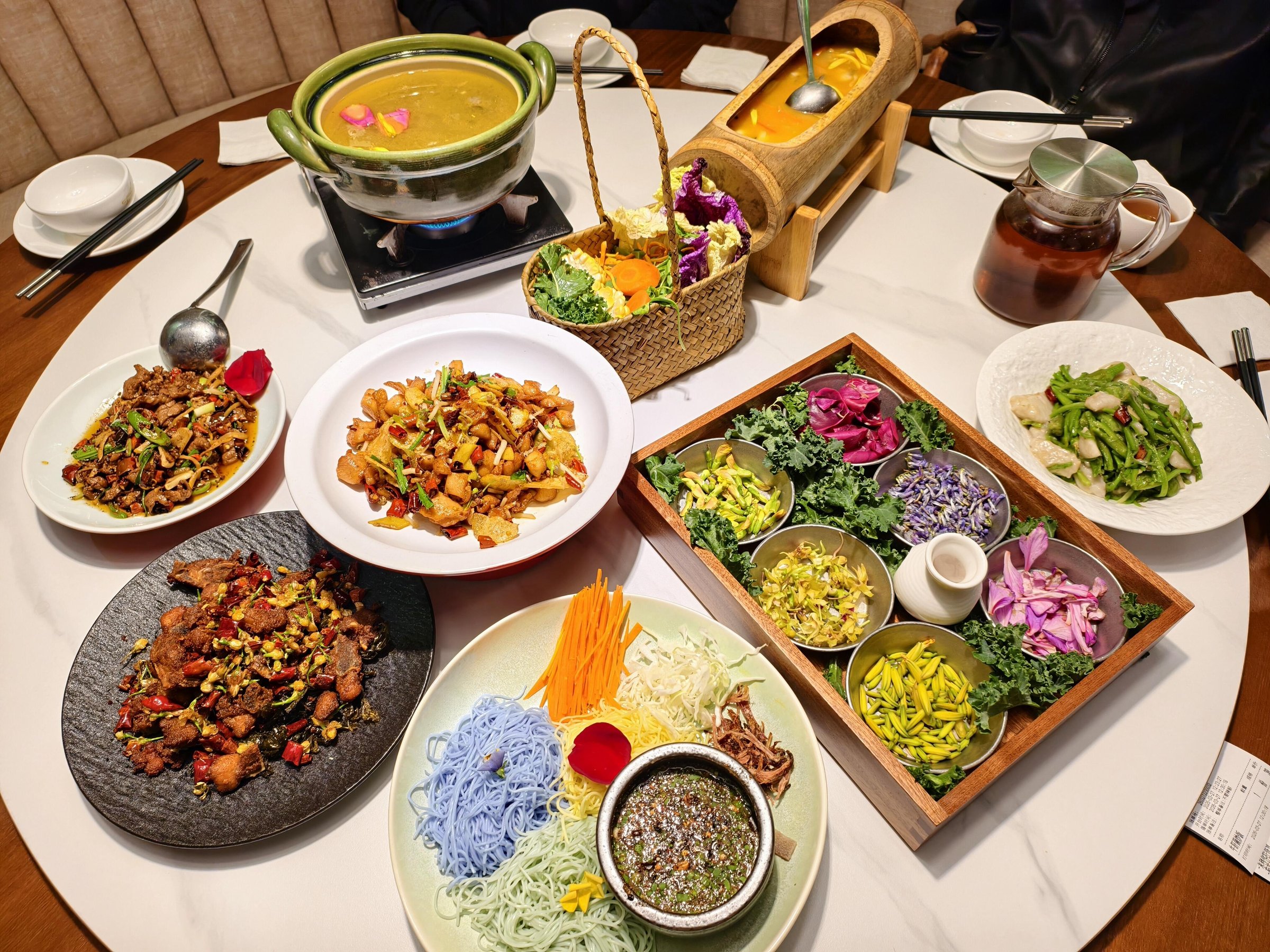
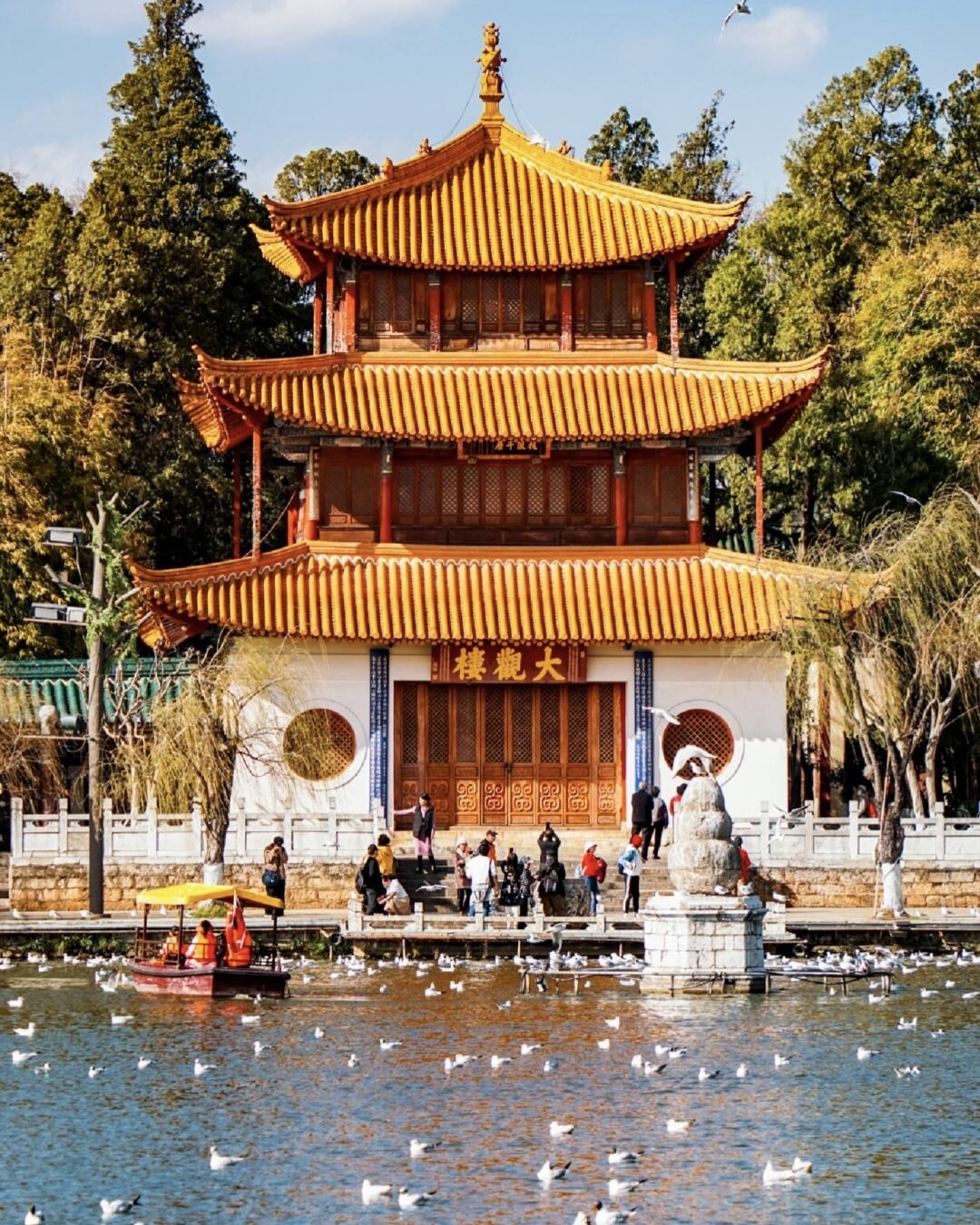
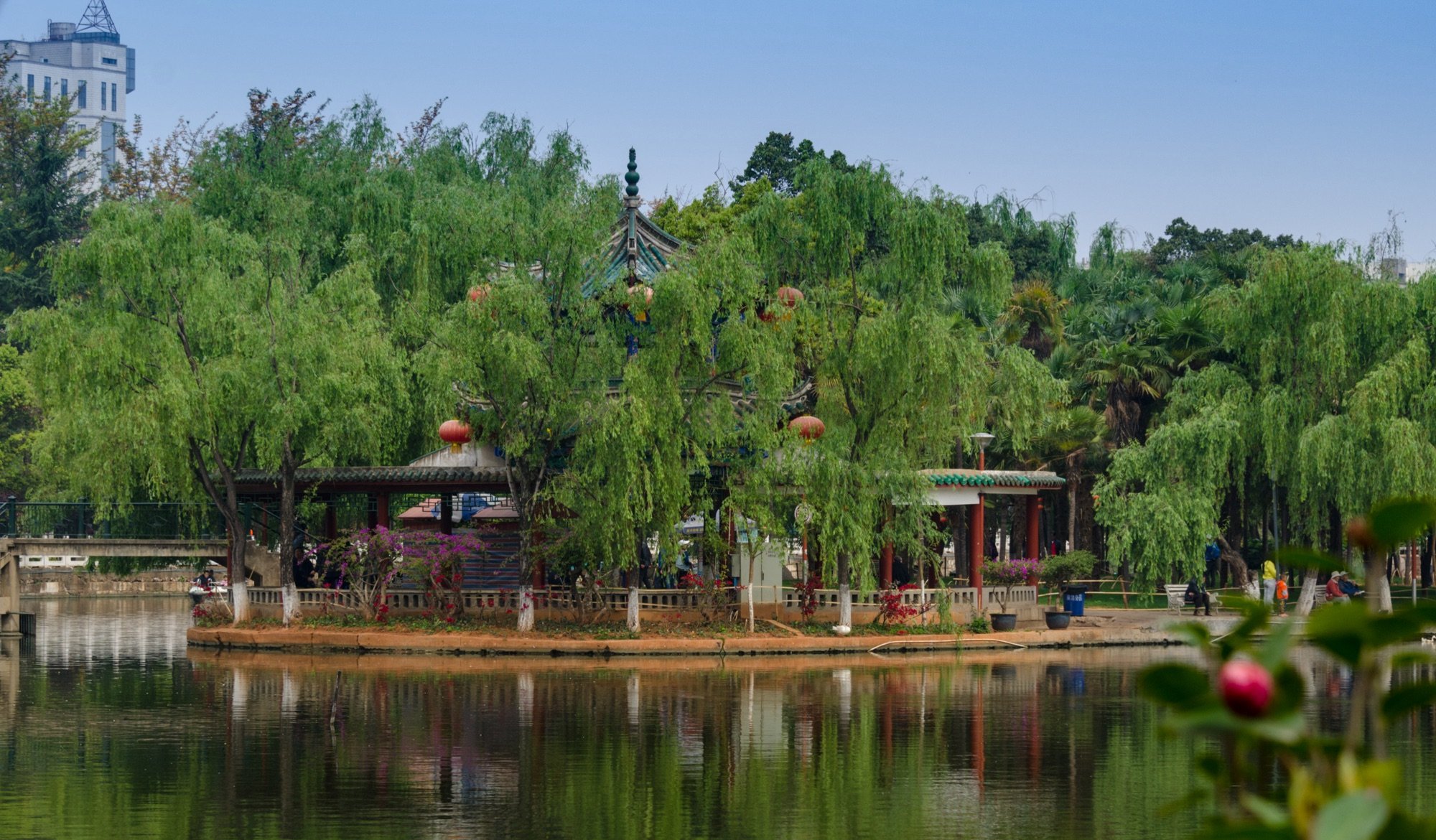
Your guide meets you at Kunming airport, 40 minutes from the old quarter around Green Lake. If you land early there is time to walk the willows and watch a city at 1,890 metres do what it does best in February, which is sit outside. The point of today is dinner. The first table of the trip is made from whatever the market had that morning, so the menu can't be printed ahead: 棠梨花 (wild pear blossom), the first 金雀花 (golden sparrow flower, in from mid-February) and anything else that turned up. Each course comes with Dian Hong, Yunnan's black tea, or a floral tea. Take notes on which petals you like. You will be cooking them tomorrow.
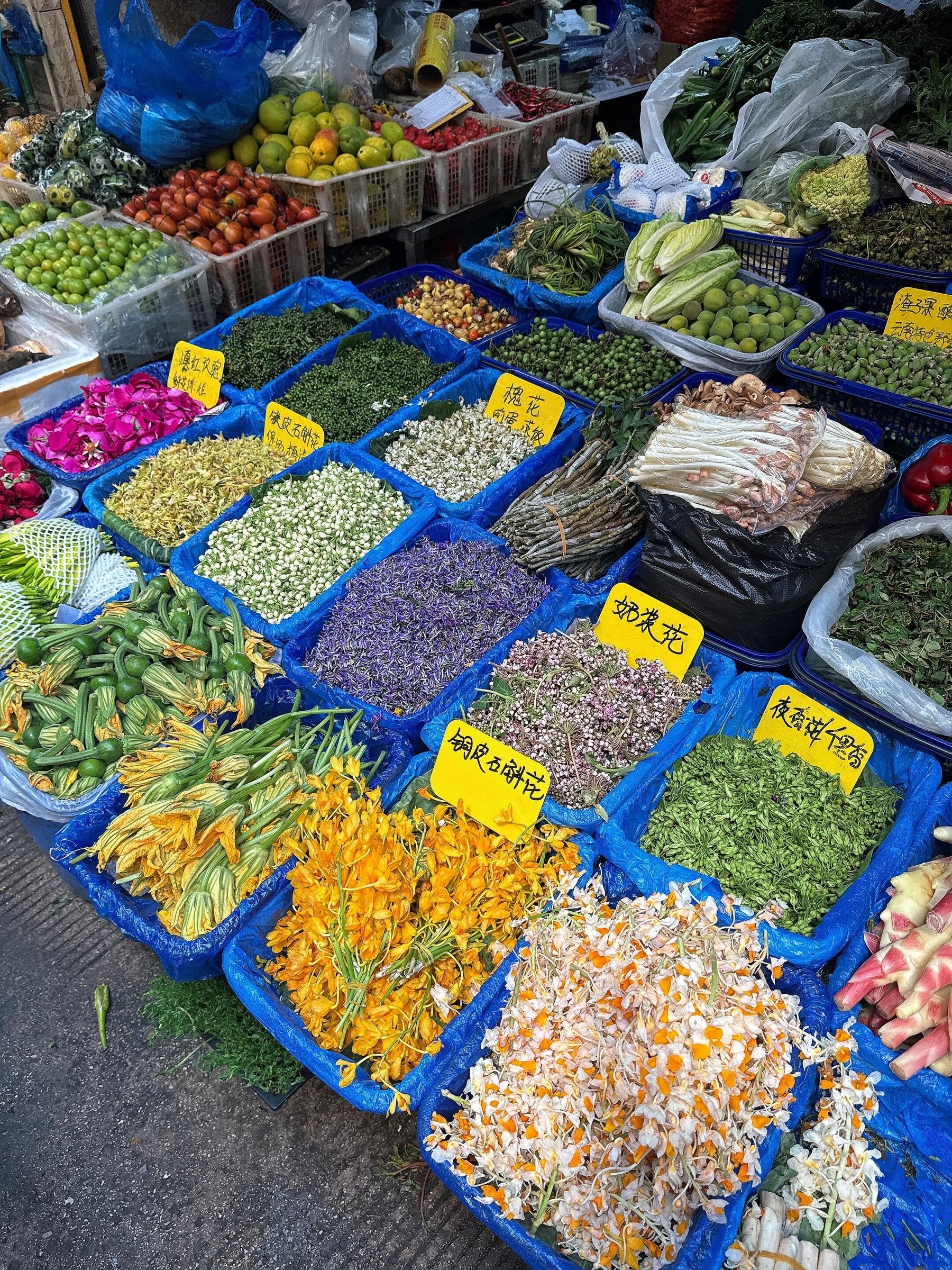
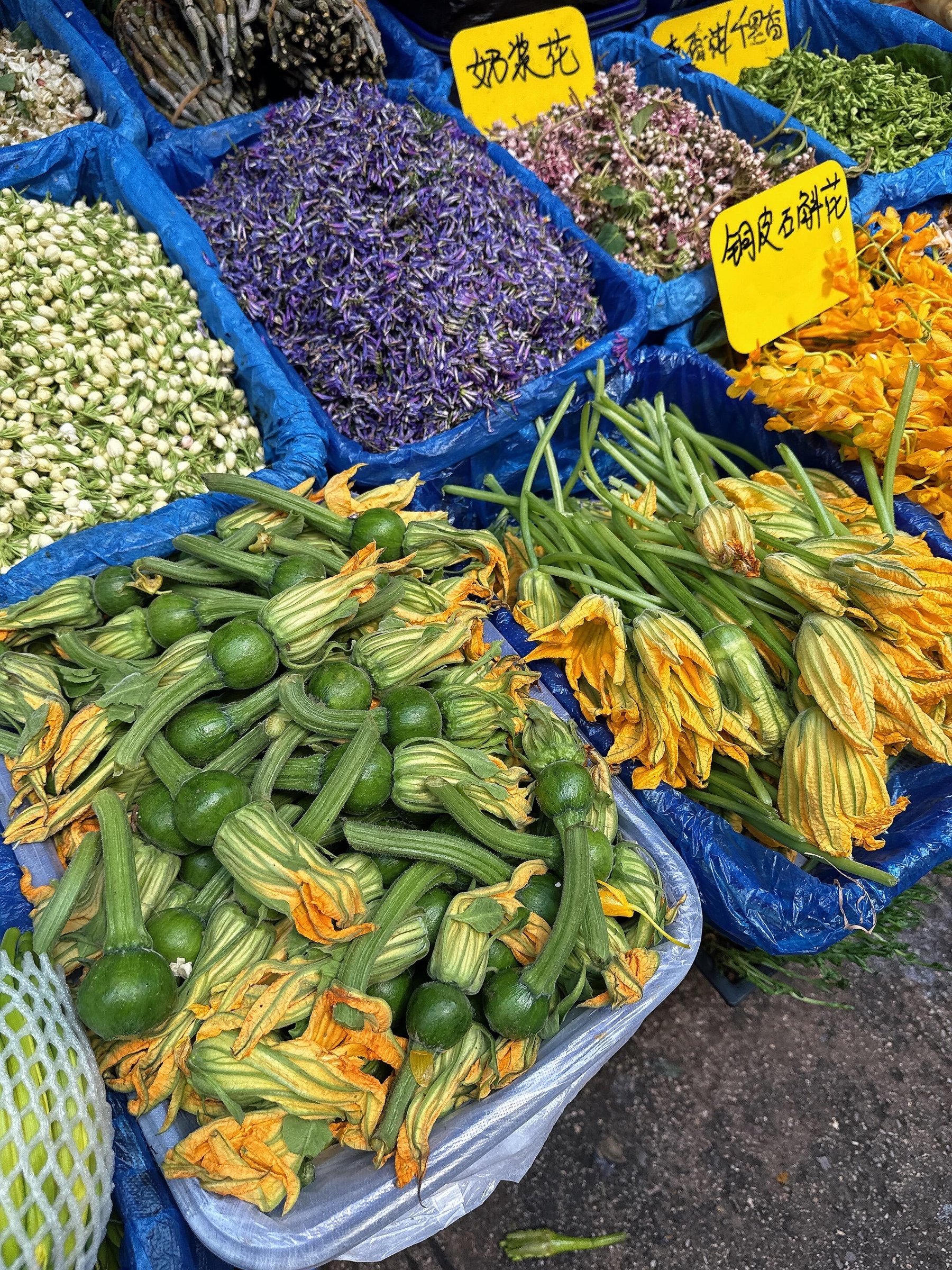
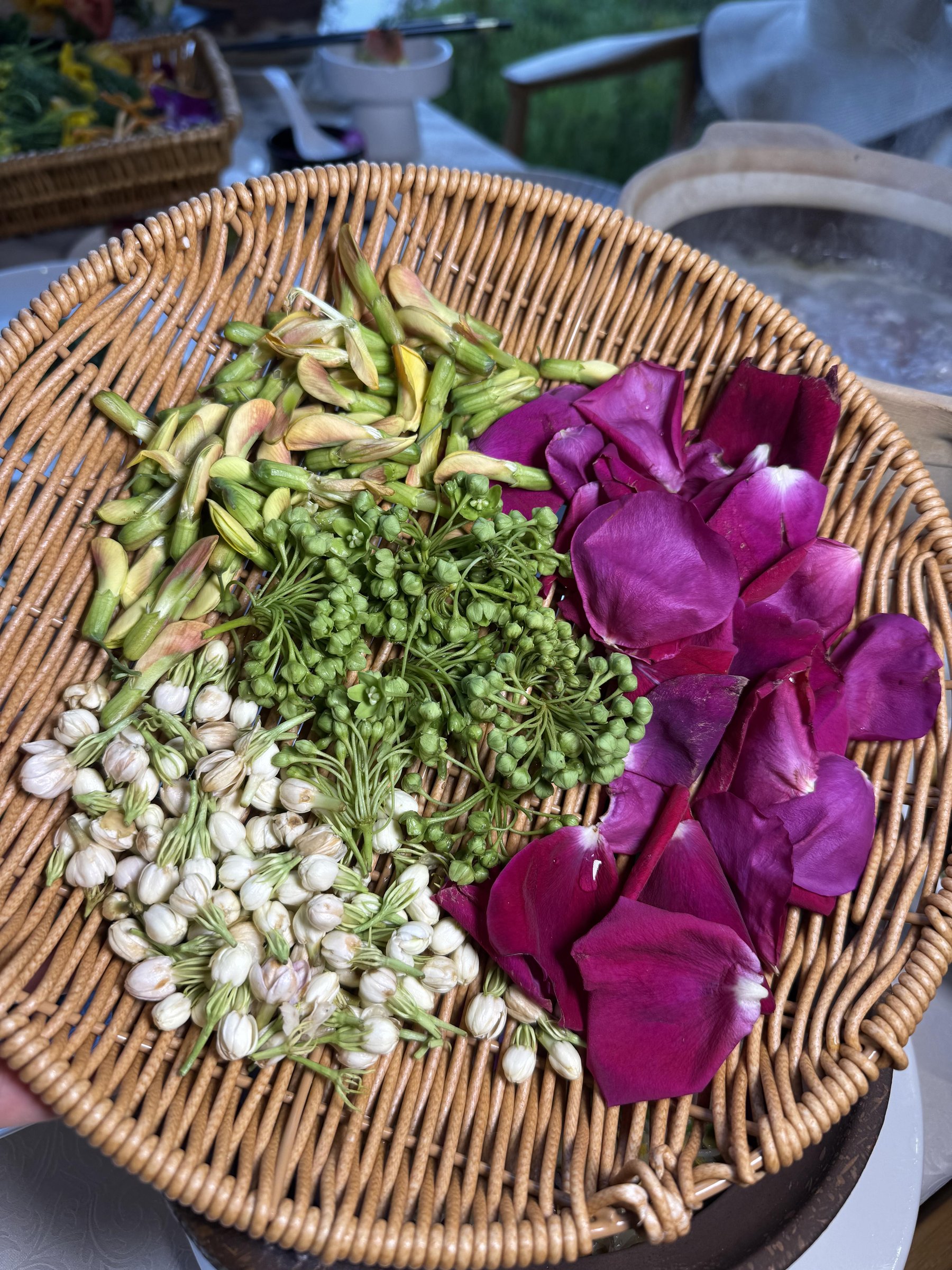
Start at a neighbourhood wet market with a flower vendor as your teacher: 金雀花, 棠梨花, 木棉花 (kapok) and 香椿 (toon), which is a tree bud rather than a flower and is on the list because nobody in Kunming cares. Then a courtyard kitchen and the old knowledge of what to blanch and what to soak. You cook 金雀花炒蛋 (golden sparrow flower with egg), 棠梨花火腿粑粑 (pear-blossom and ham cakes) and kapok with broad beans. After lunch, the Botanical Garden. After dinner, Dounan (斗南), Asia's largest fresh-cut flower market. The retail halls keep 09:00 to 18:00, but wholesale only starts about 20:30 and runs to one or two in the morning, with a visitor auction until 22:00. Stay an hour or two. Leave the small hours to the florists.
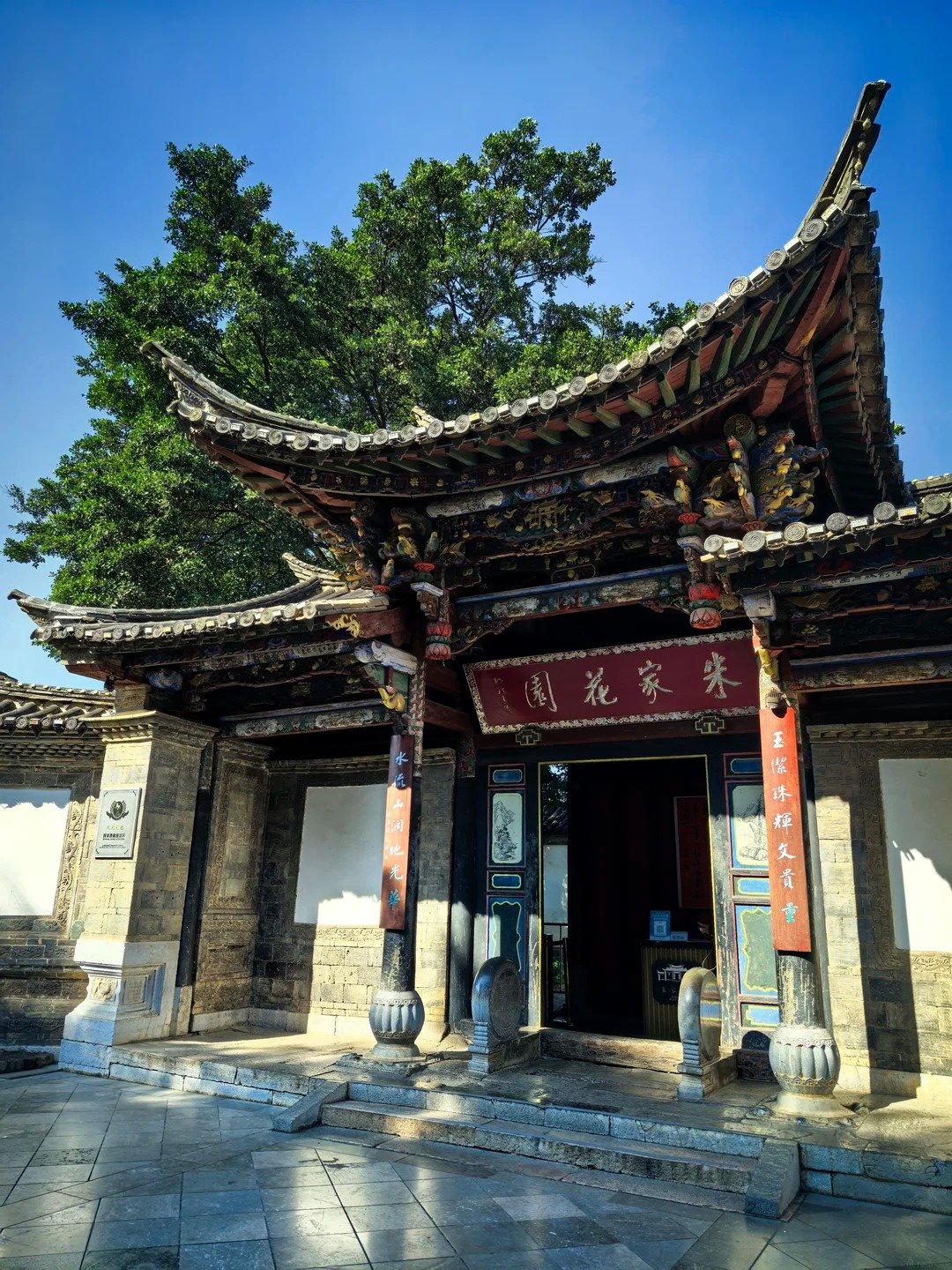
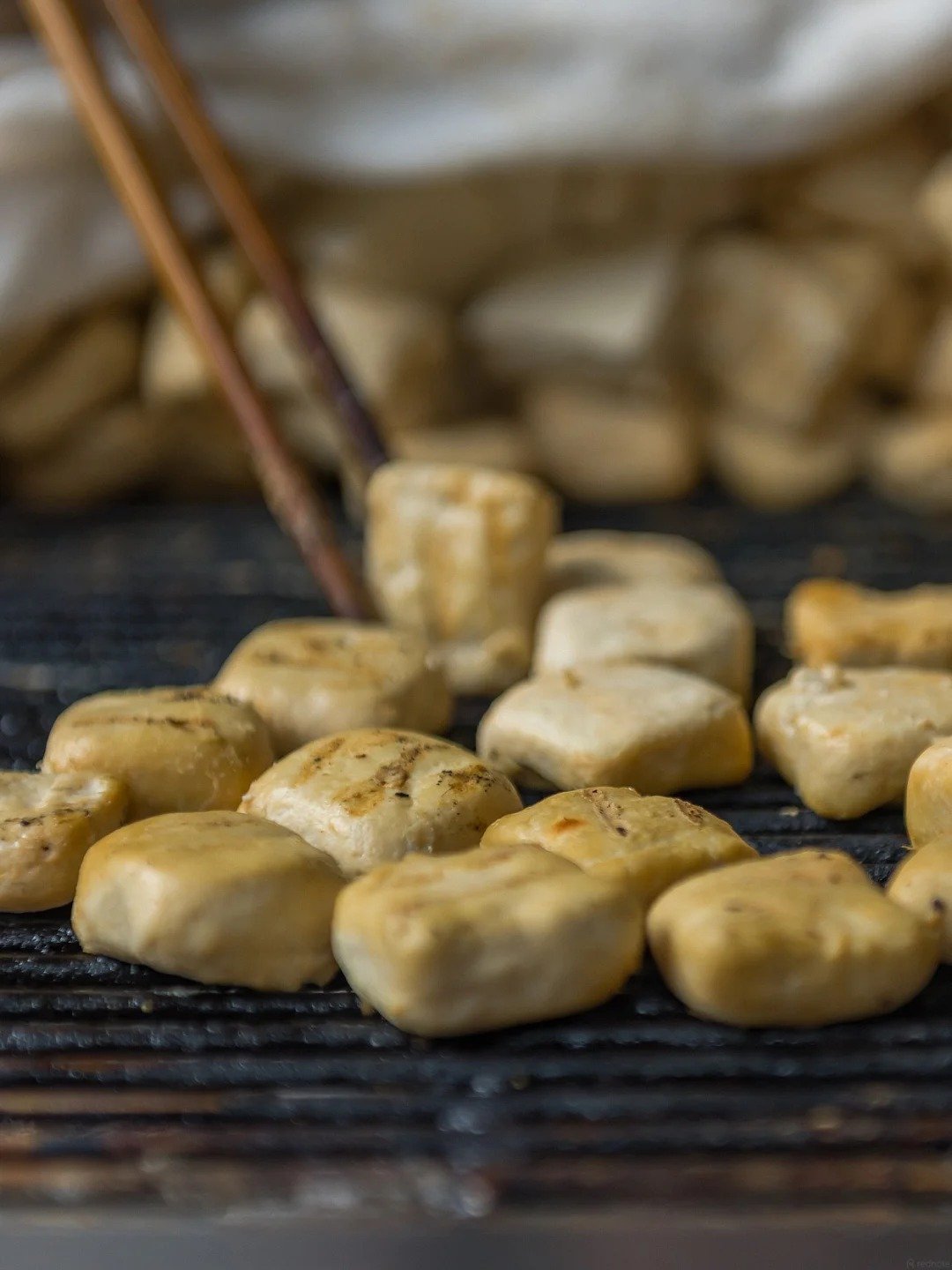
Two hours by train to the old walled scholars' town of Lin'an (临安), which everybody now calls Jianshui. Drop your bags and go straight to the Dabanjing, the big well outside the west gate, where the workshops still soak, grind and press tofu with its water, by a method that hasn't changed in generations. The afternoon goes to the Zhu Family Garden: 42 courtyards and 214 rooms, built by two late-Qing brothers with money to show. Supper is when the town gets serious. Thumb-sized cubes of 烧豆腐 (grilled tofu) puff and blister over charcoal, you dip them in dry chilli or a wet sauce, and the grill-keeper counts your tab in corn kernels. You will lose count. They won't.
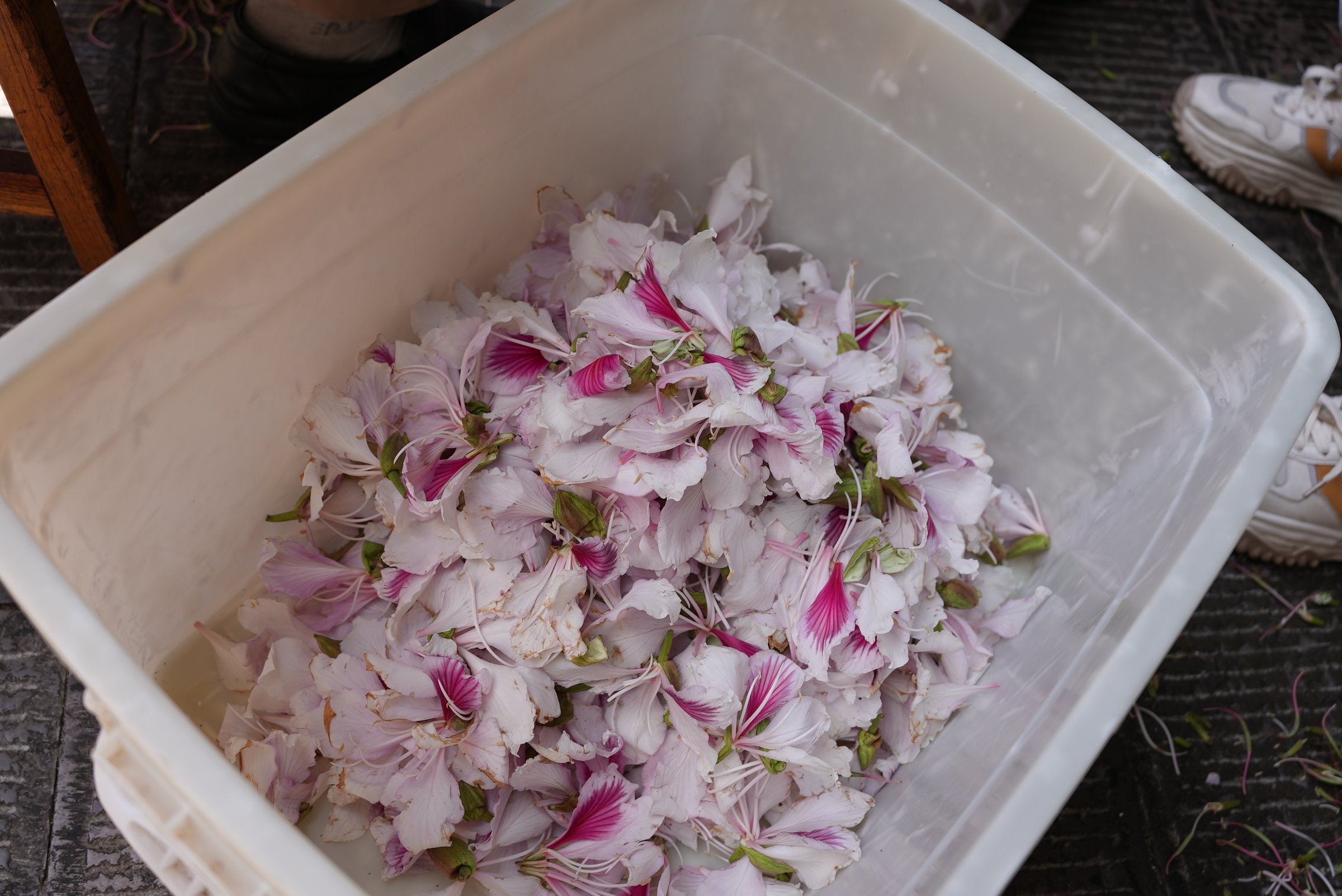
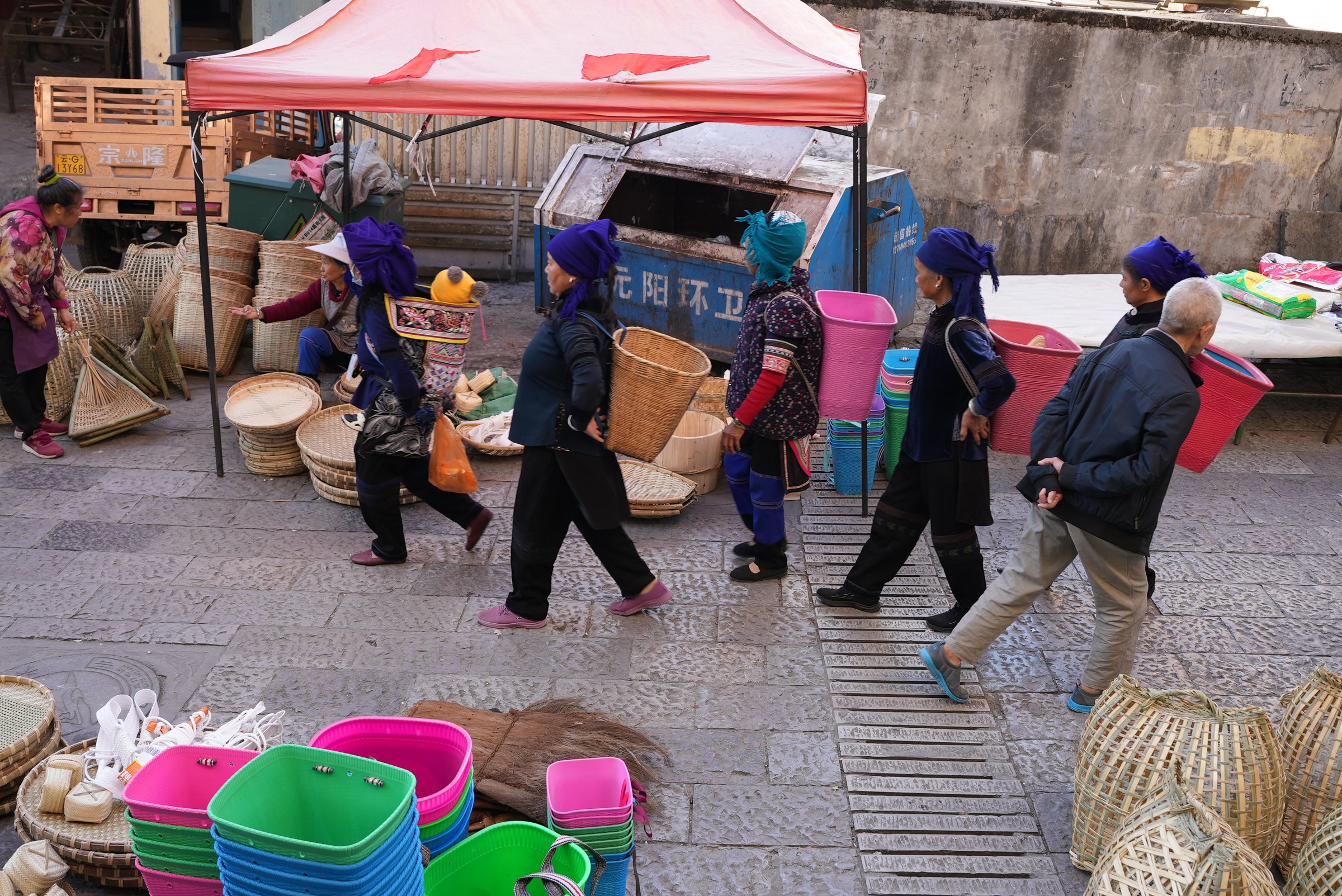
First thing, the morning market, while it is still loud. By March the southern markets carry 白花 (Bauhinia), sold loose by the tub; the one in the picture is next door in Shiping. Then 20 minutes through the farmland to Tuanshan, a Qing village the World Monuments Fund put on its 2006 watch list, and lunch with a local family, flowers and tofu on the same table. The afternoon is purple clay, one of China's four famous potteries, fired and carved by hand, and the clay Jianshui's steam-pot chicken (汽锅鸡) is cooked in. Choose a finished tea bowl at a workshop and we carry it south. Anything you throw yourself has to be fired and posted on, about a month later.
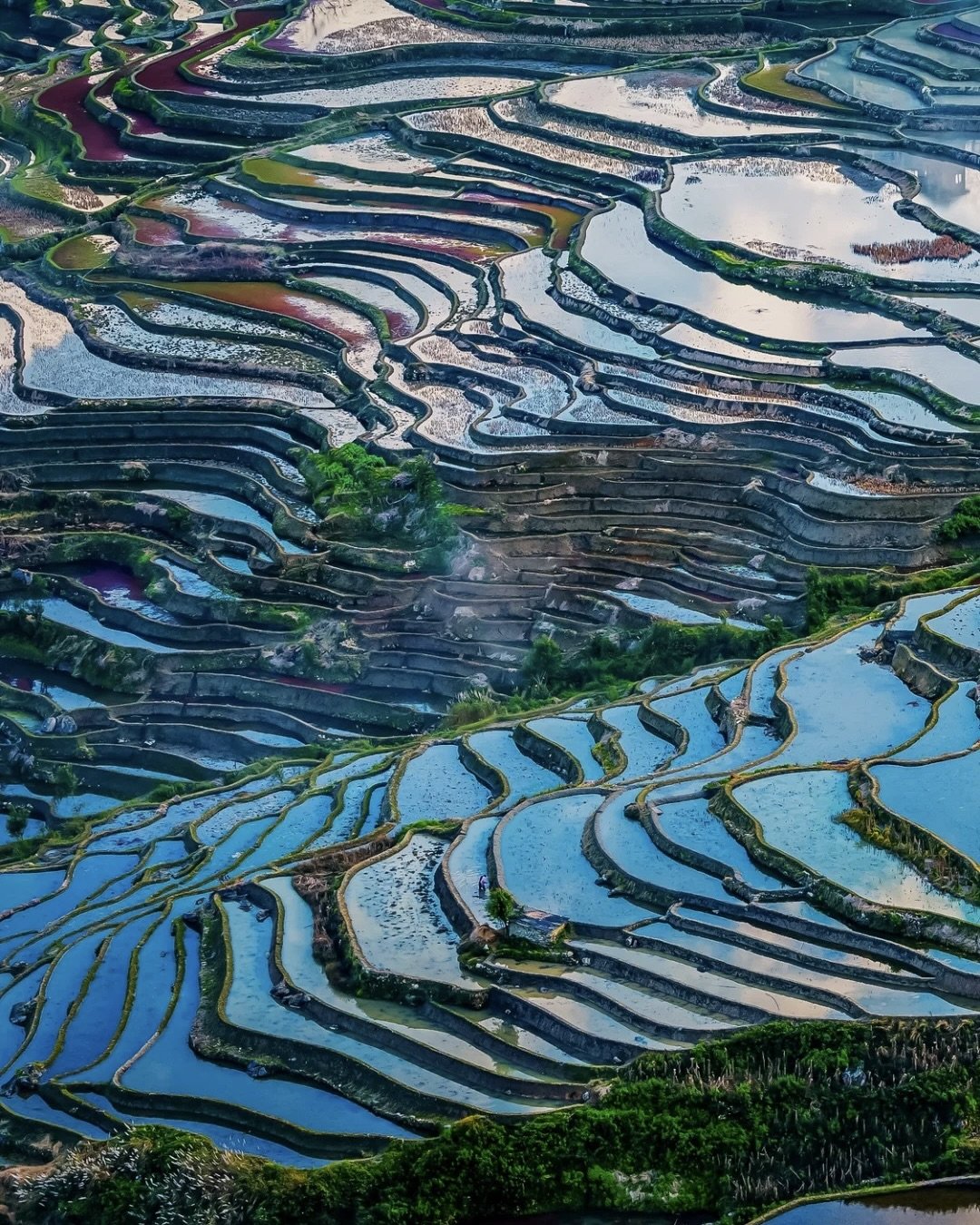
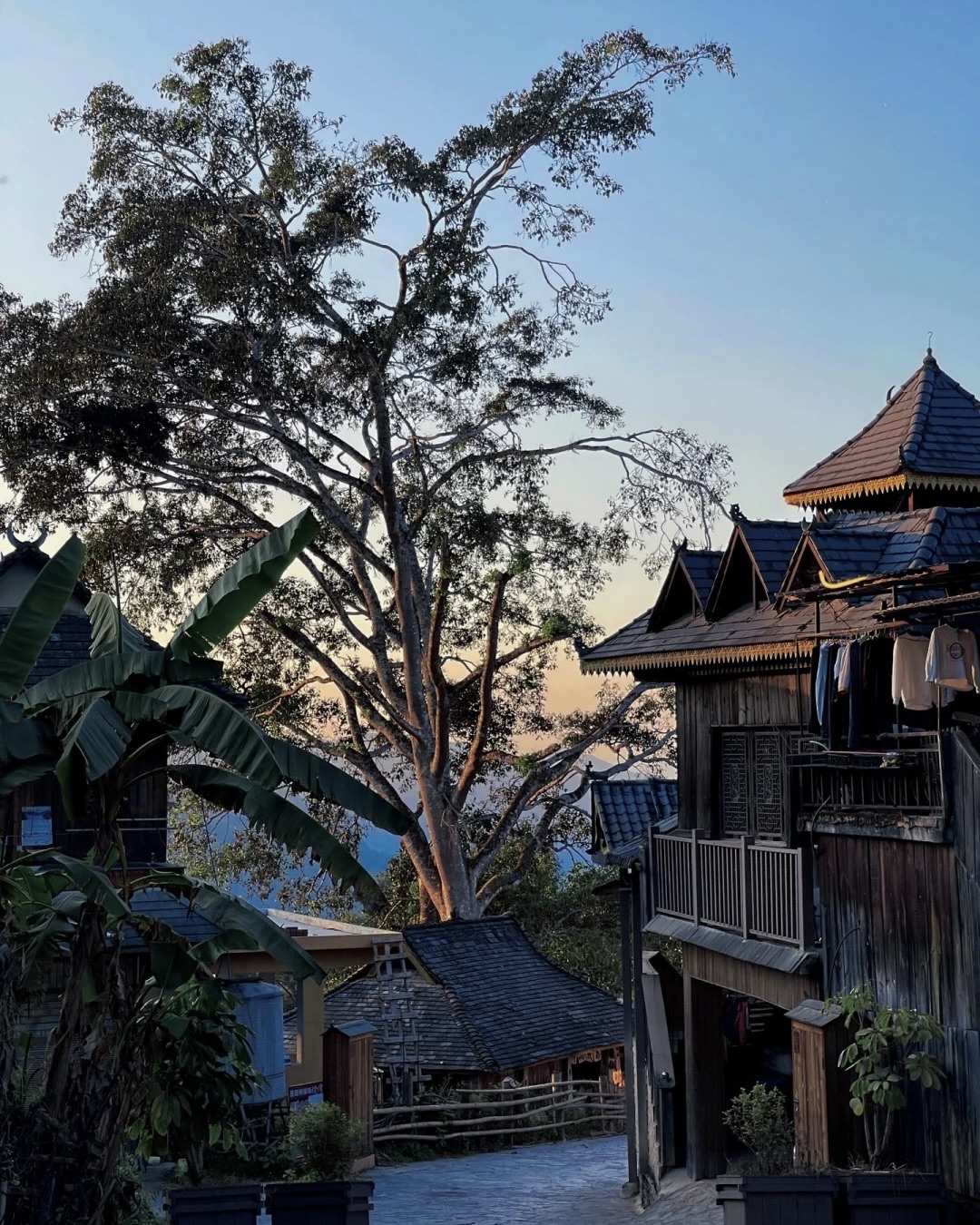
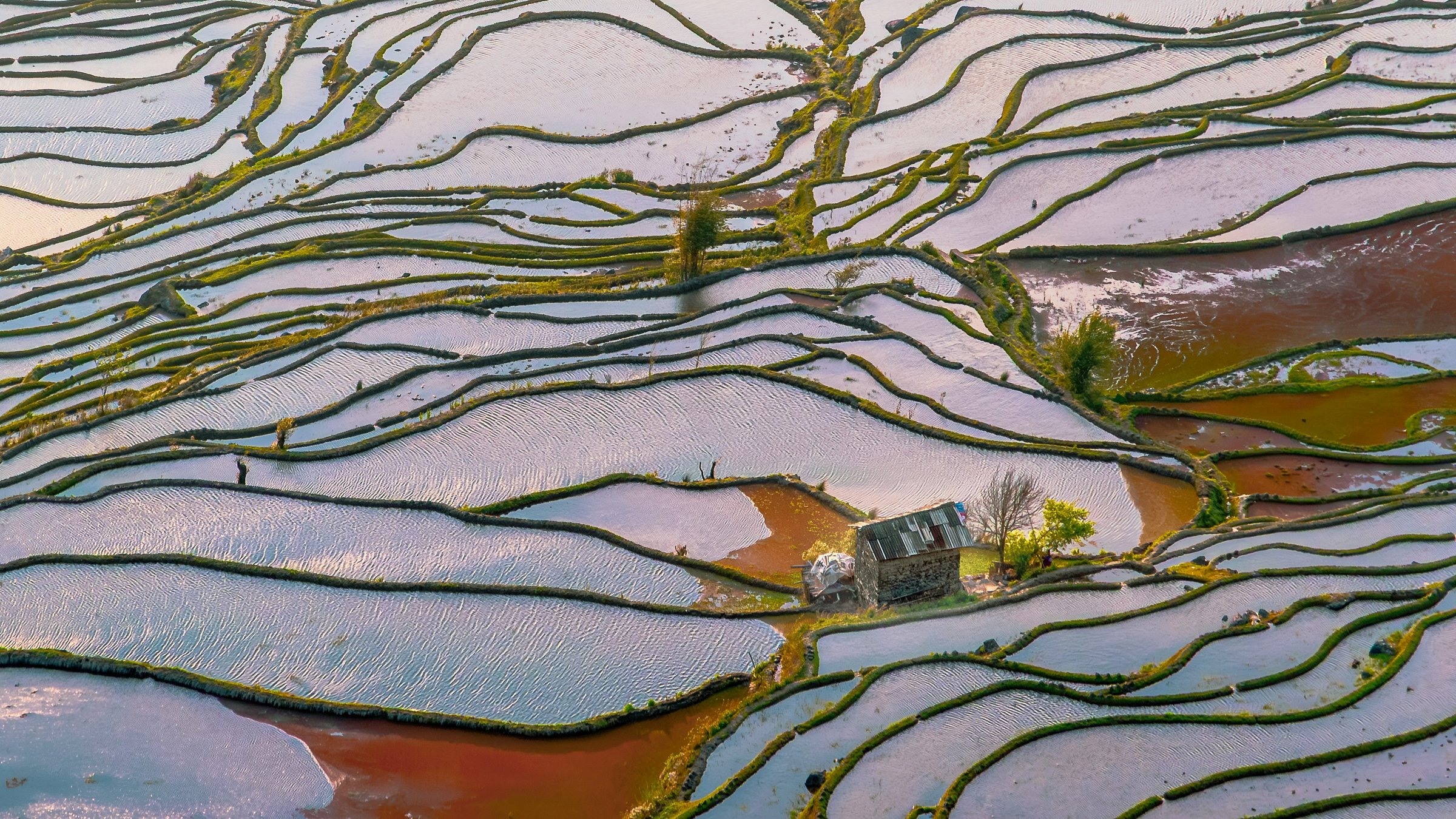
Three hours on a road that never gets near an expressway, up through the county town and Xinjie into Hani country. The terraces hold water from late October, and the peak is mid-November to mid-February. They are still flooded into early March, then go in stages towards spring planting, so if mirrors are why you came, take the front half of this window. Sunset is at Laohuzui, a drop of terraces that faces west, turns red in the last light and pulls a smaller crowd than Bada across the valley. The terrace ticket is valid for three days, so a clouded-out evening gets a second go tomorrow.
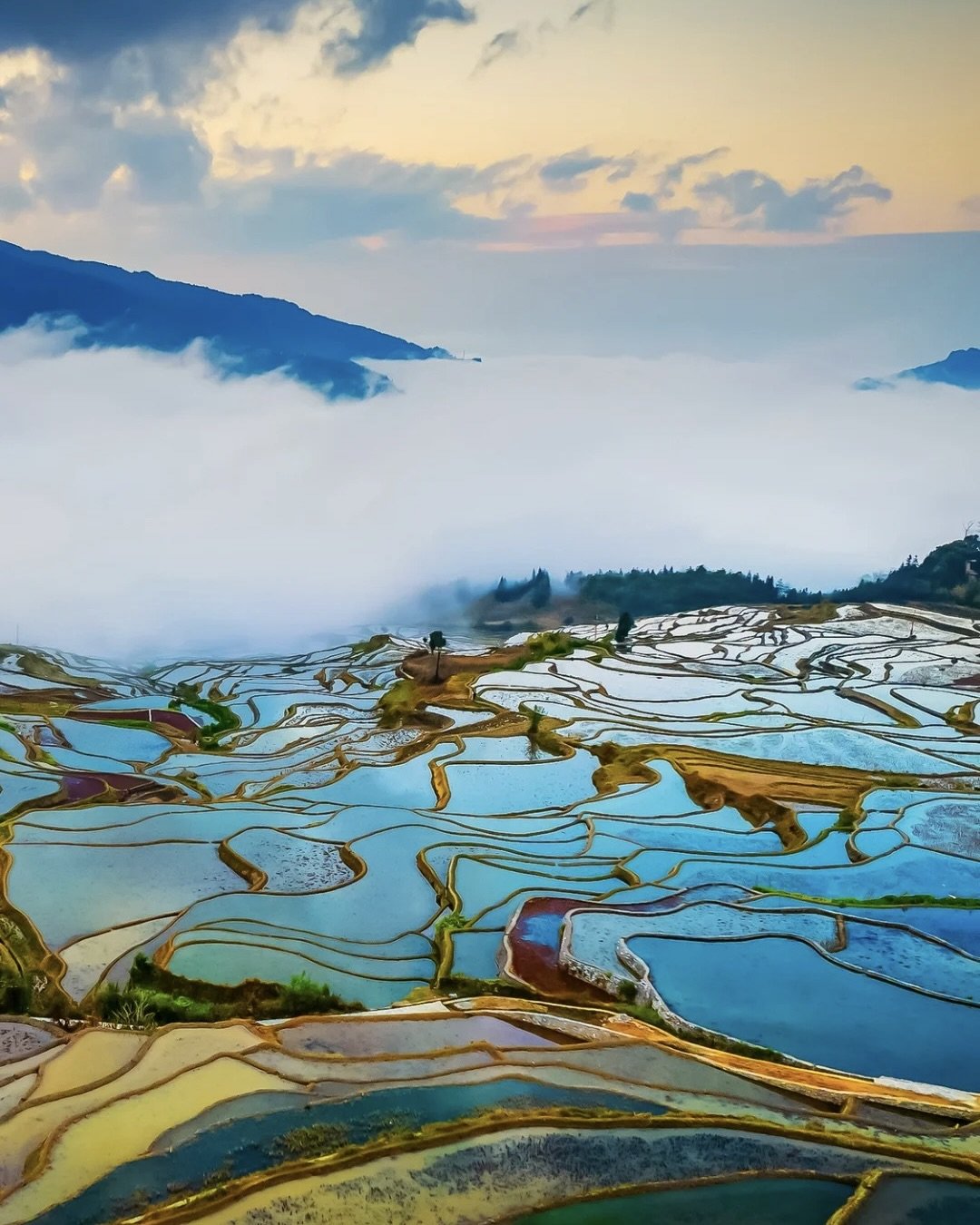
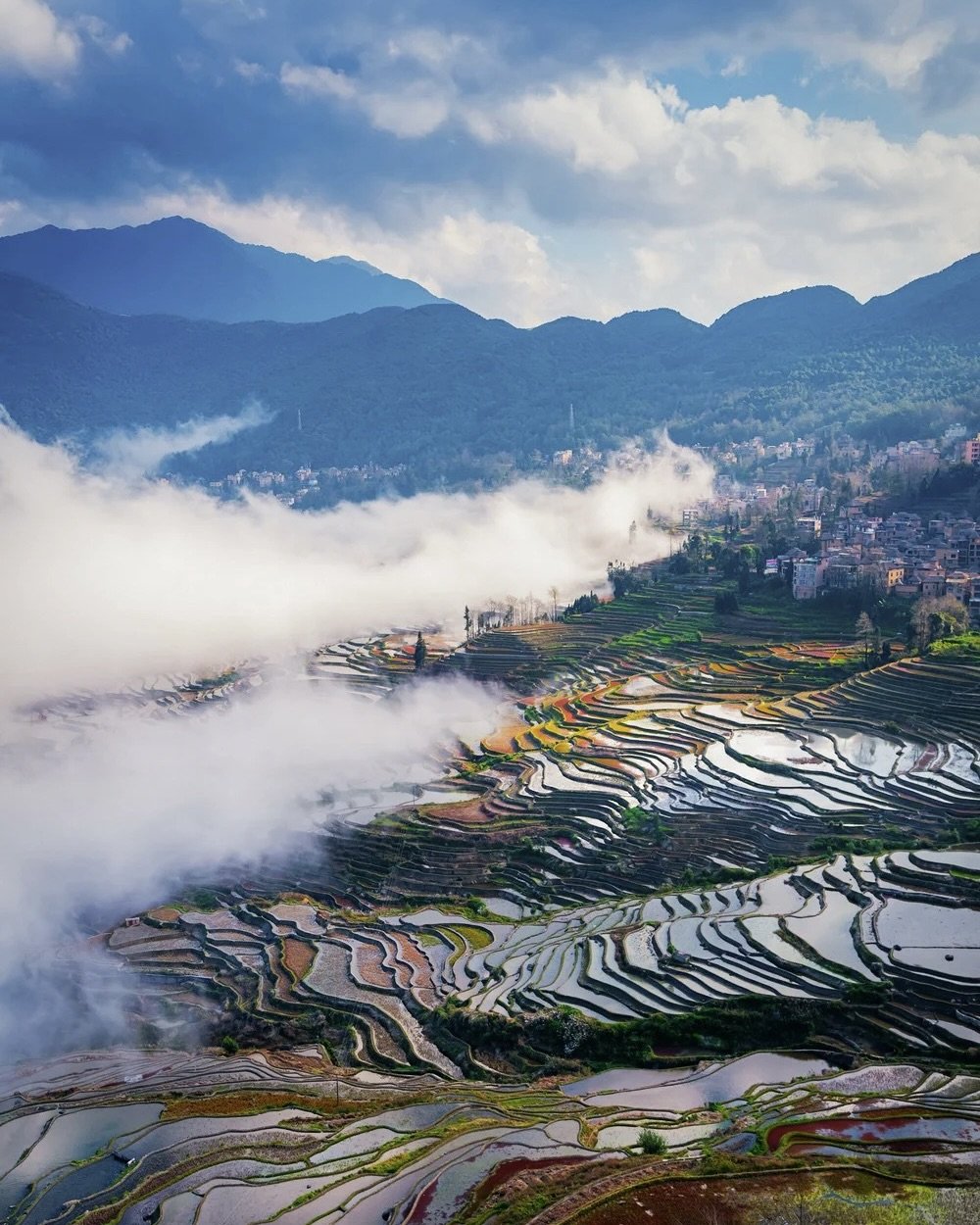
Duoyishu at first light, then breakfast with the cloud still lifting. Later, on foot through Azheke with a village host, past mushroom-roofed houses and the working water mill, along a system 1,300 years old that runs forest, village, terrace, river in that order. The income here goes back to the village households. Lunch is at a Hani family's table: the red rice and terrace fish these hillsides exist to grow, plus whatever has been picked along the paddy edges this week. You may have read about the 长街宴 (long-street banquet). Its dates don't fall in this window and it can't be booked, so we don't pretend. If the four-day market cycle lands right, Xinjie's hilltop stalls are busiest around 10:00.
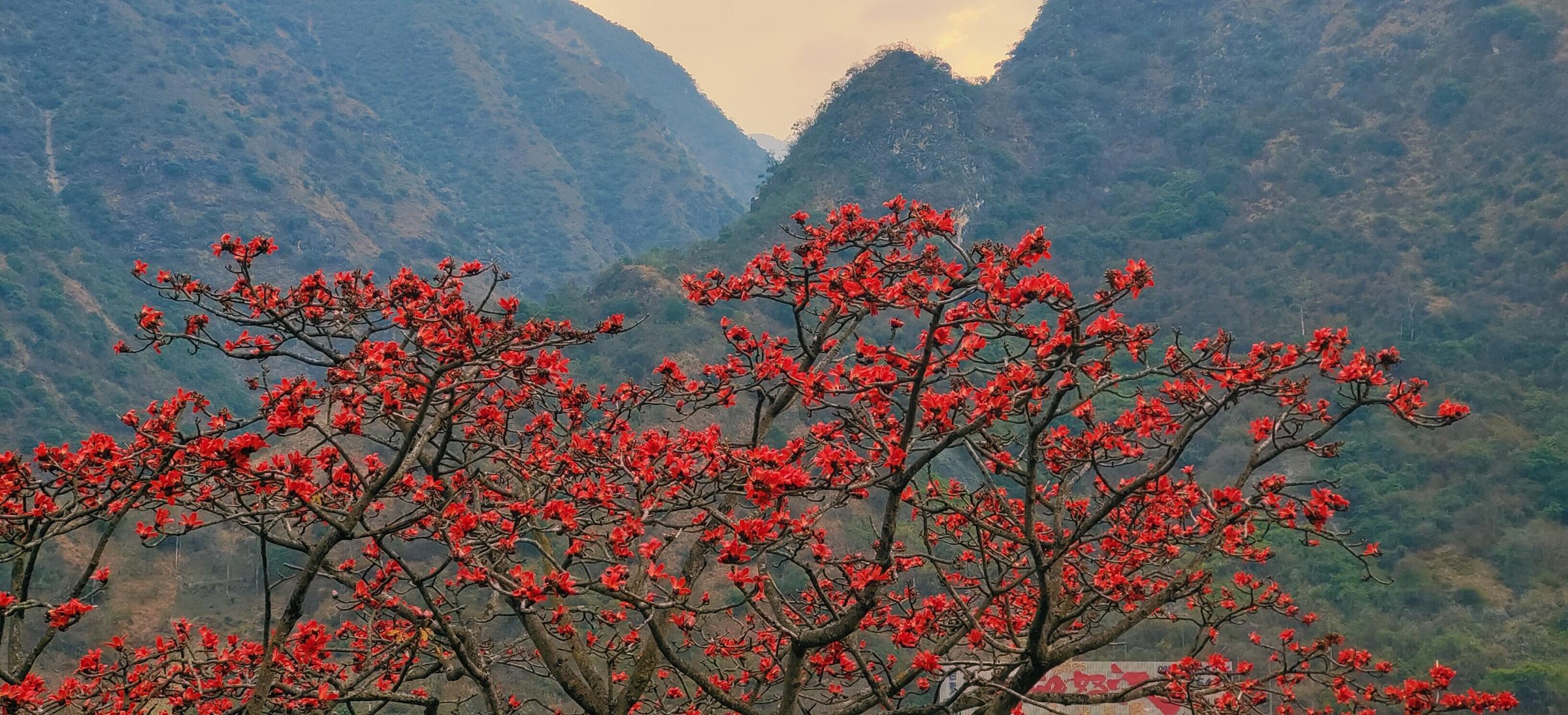
The long day, and the reason to come in February. Five to six hours of mountain road, down off the terraces into the hot Red River country and on through the hills to Pu'er. Kapok (木棉花) blooms from around Spring Festival to about mid-March, and for those weeks whole trees go red. Nobody publishes a date for this particular valley, so we can't name the day; we can put you on the road at the right time of year and stop where the colour is. Lunch is a picnic under the trees, stamens stir-fried with broad beans, as they are eaten across Yunnan. The flowers come from a market. Doctors warn against eating the ones that fall by the roadside, and on this we side with the doctors.
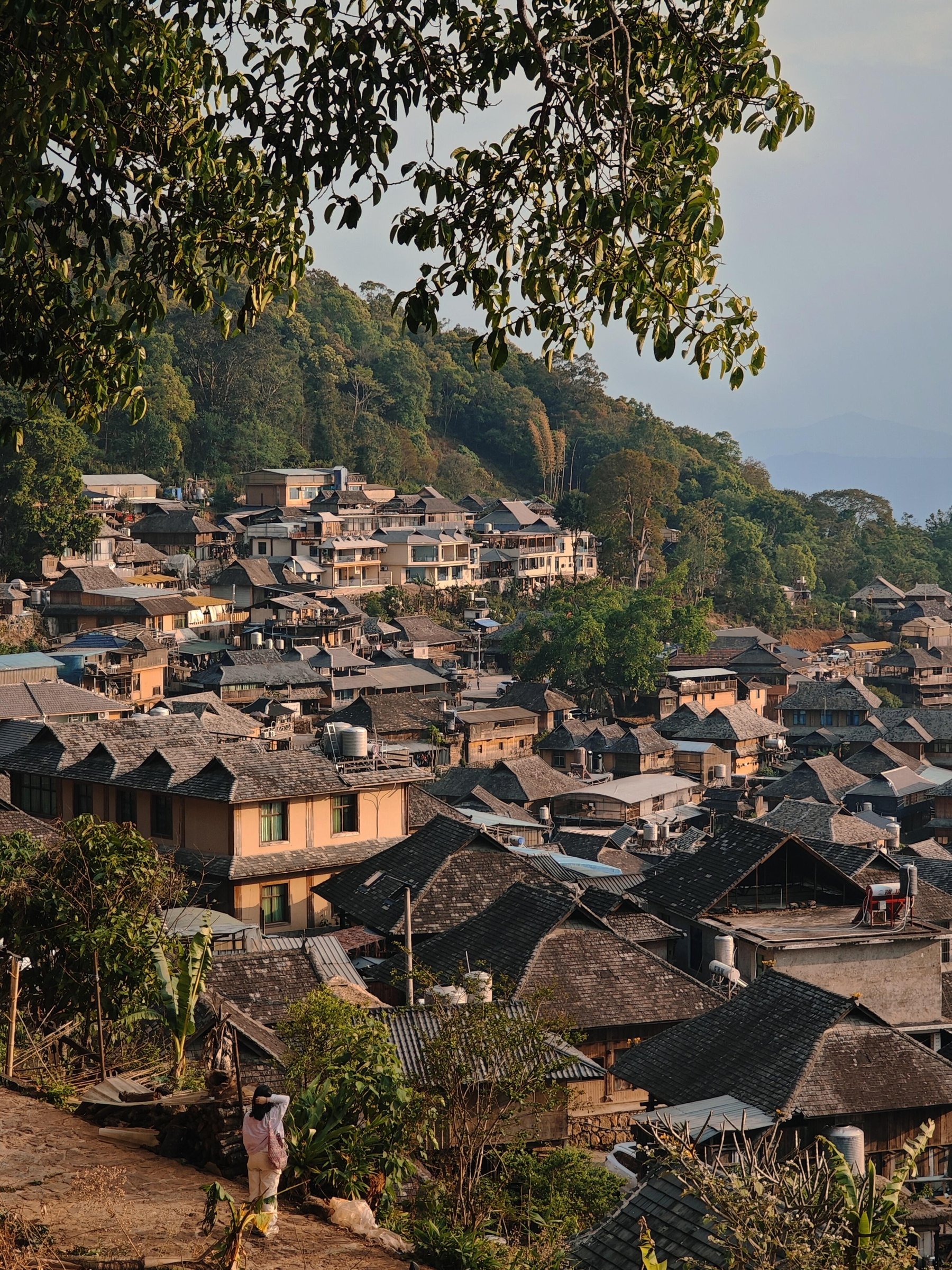
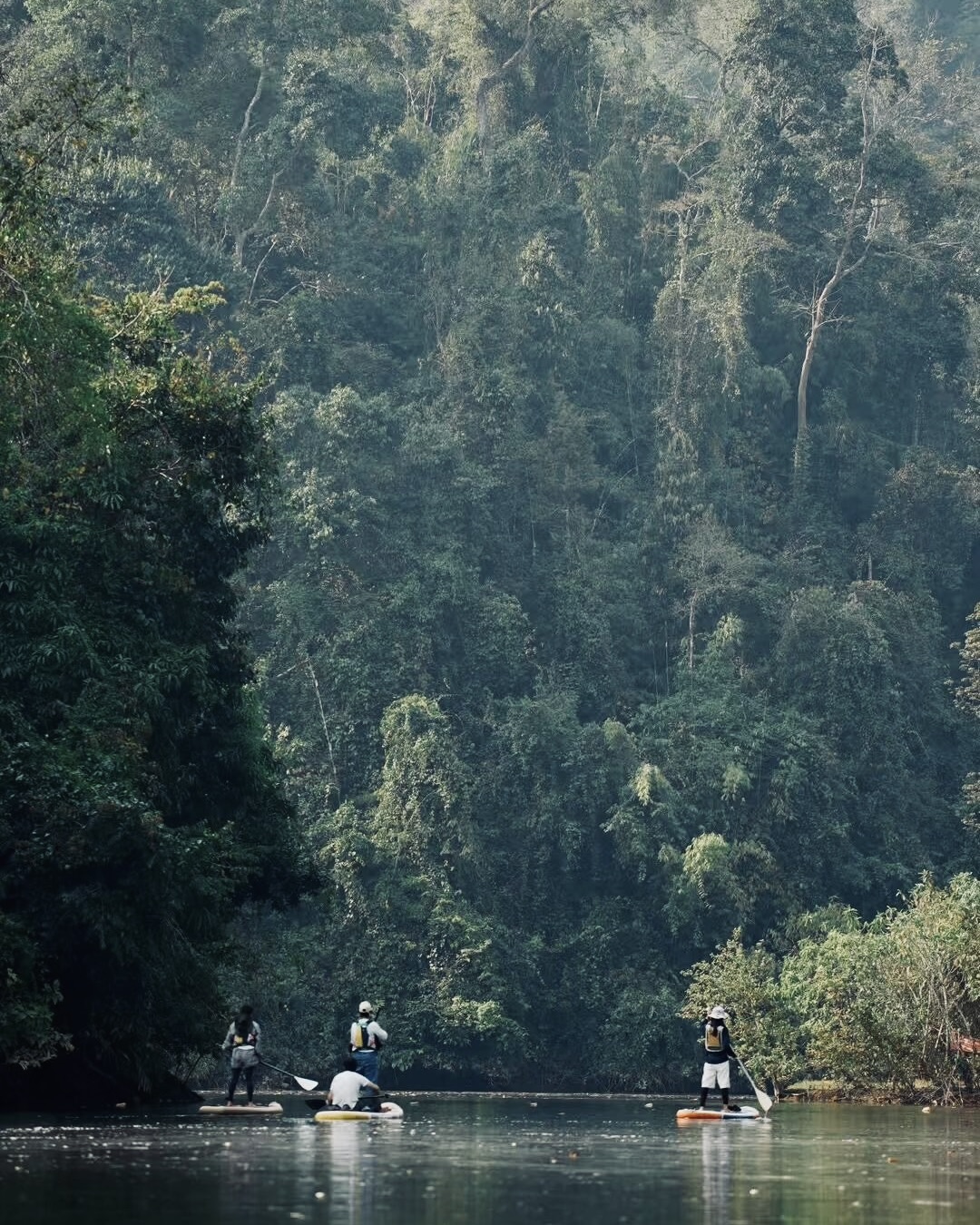
Three hours to Jingmai, the first tea landscape on the World Heritage list. Nothing grows in rows up here. The trees stand inside the forest, where Bulang and Dai families have tended them for centuries. Walk the old trail from Wengji to Mangjing, about two hours under the canopy, past dark timber houses with steep shake roofs, and pay your respects at the temple to Pa Ailaeng, who the Bulang say first planted tea on this mountain. In this window the spring leaf isn't ready, so nobody is picking and neither are you. On a late-March departure this is the day you pick first-flush leaf, which starts here in the last days of the month. Dinner is pickled tea-leaf salad and 白花, in flower around Simao from January, at a Bulang family table.
Mist in the valleys first, then the fire pit: an elder roasts the leaf over the embers and pours in a set sequence, the Bulang way. This season's tea doesn't exist yet, so taste aged Jingmai Pu'er instead and press a cake from last year's leaf to carry home. On a late-March departure you would pick and pan-fire this season's leaf here. Then about 3.5 hours down to Jinghong and an hour on to Menglun. Dinner is the 百花宴 (hundred-flower banquet), a lantern-lit garden table of what the southern markets are selling. Empress Wu Zetian is said to have had hundred-flower cakes made for the Festival of Flowers. That part is legend. The Jianshui bowl waiting at your place is not, and it comes filled with aged tea from the mountain.
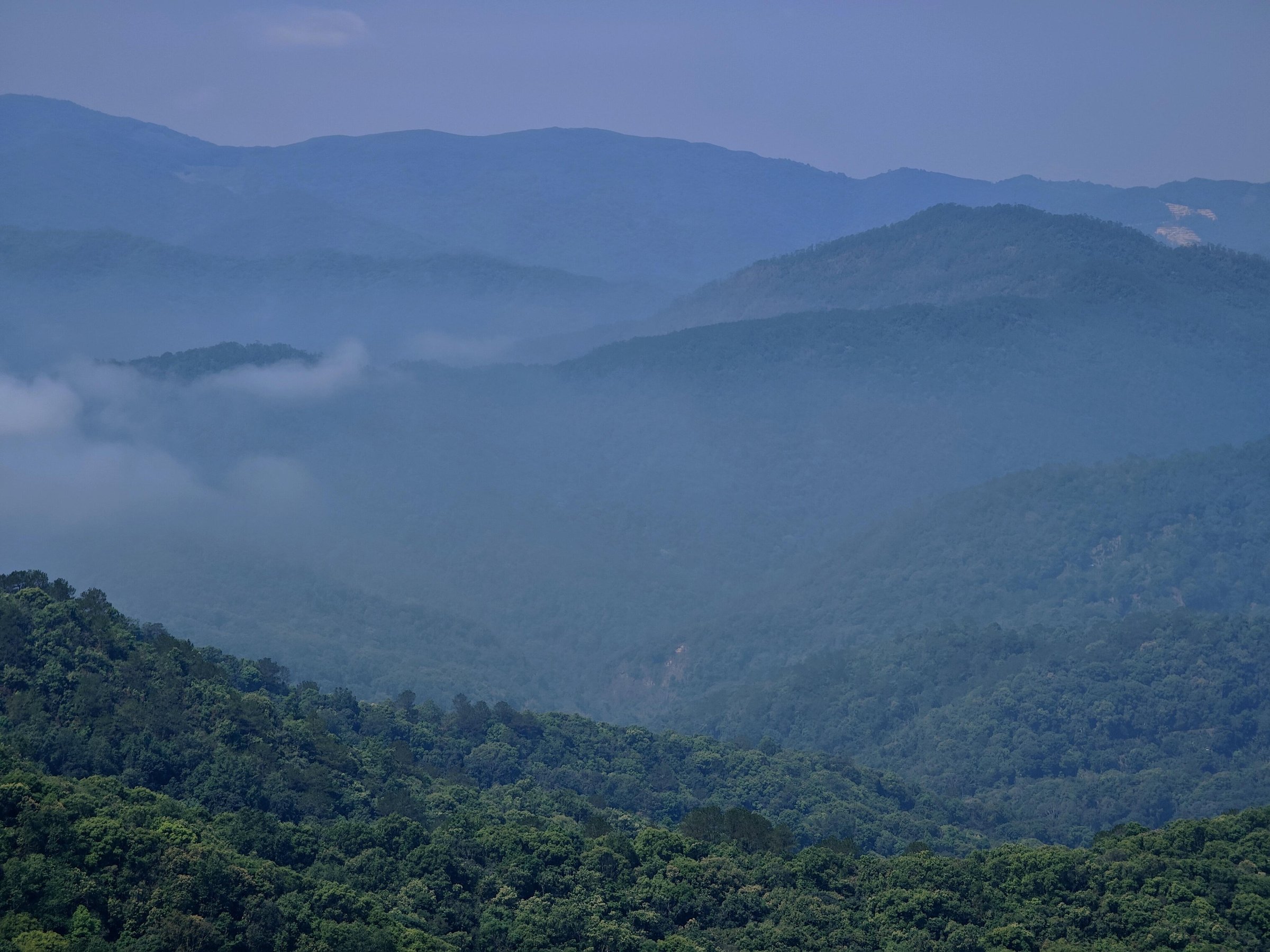
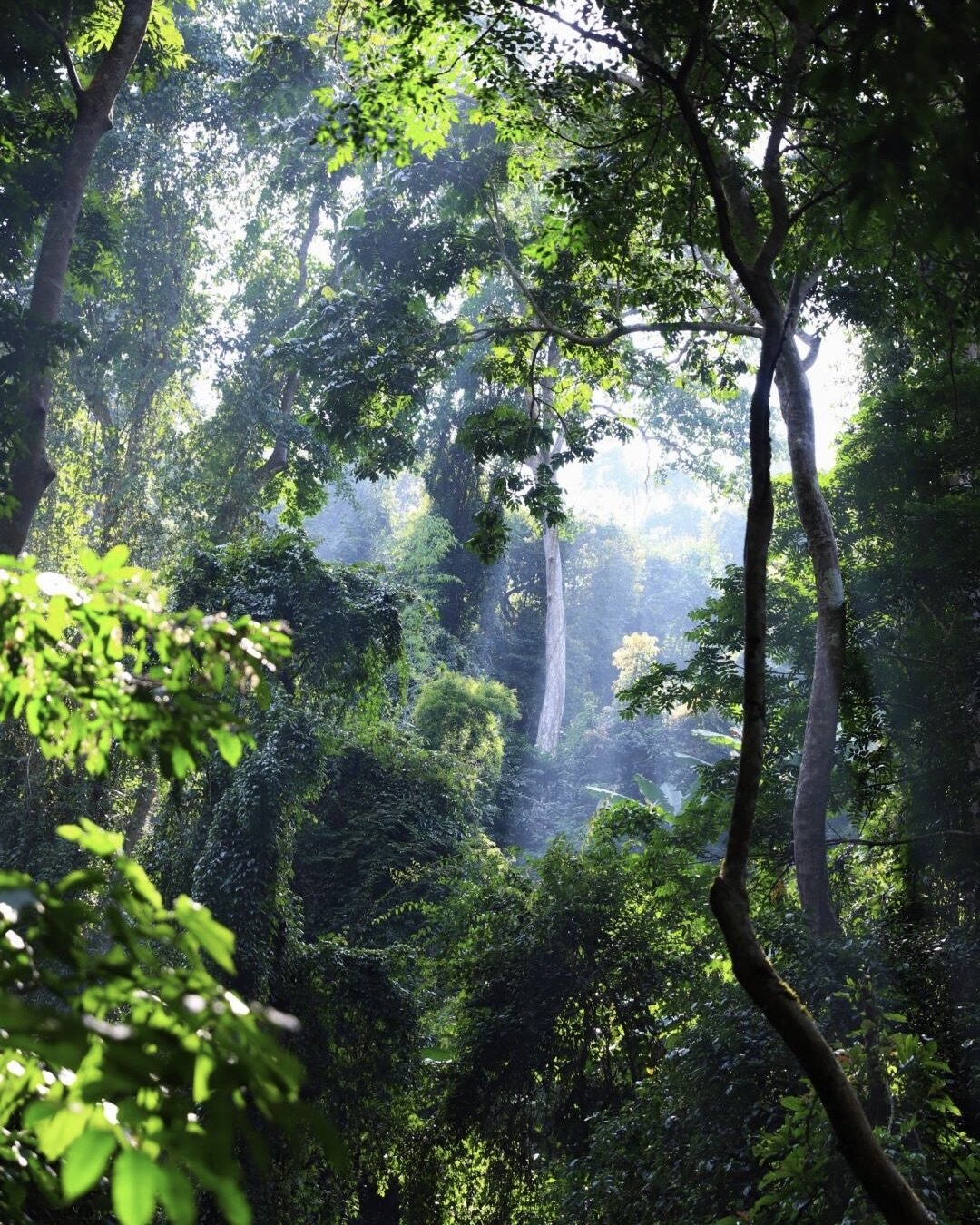
The Chinese Academy of Sciences' Tropical Botanical Garden is right here at Menglun, an easy morning if your flight is after lunch. With more time, Primeval Forest Park outside Jinghong is the alternative: tall trees, shafts of light, no flowers to cook. About an hour to Jinghong airport, then home via Kunming.
Six nights at listed stays: a courtyard hotel inside Jianshui's old town, a resort on the Duoyishu slope, a Bulang family inn in the tea forest and a river resort at Menglun. Kunming and Pu'er are booked to your brief.
Three garden courtyards and a still reflecting pool inside the old town, with the tofu grills a short walk through the lanes. Two nights in Jianshui.
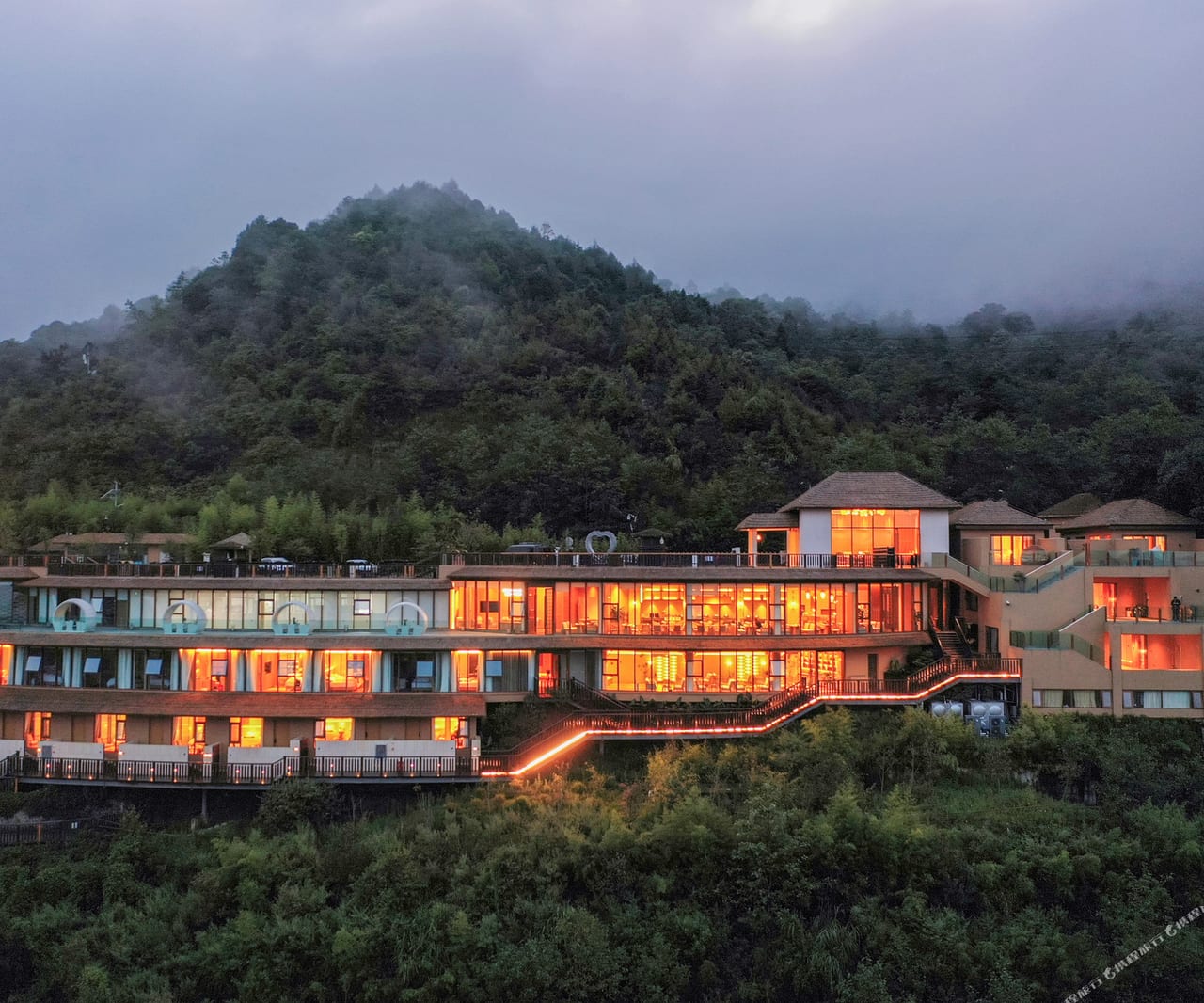
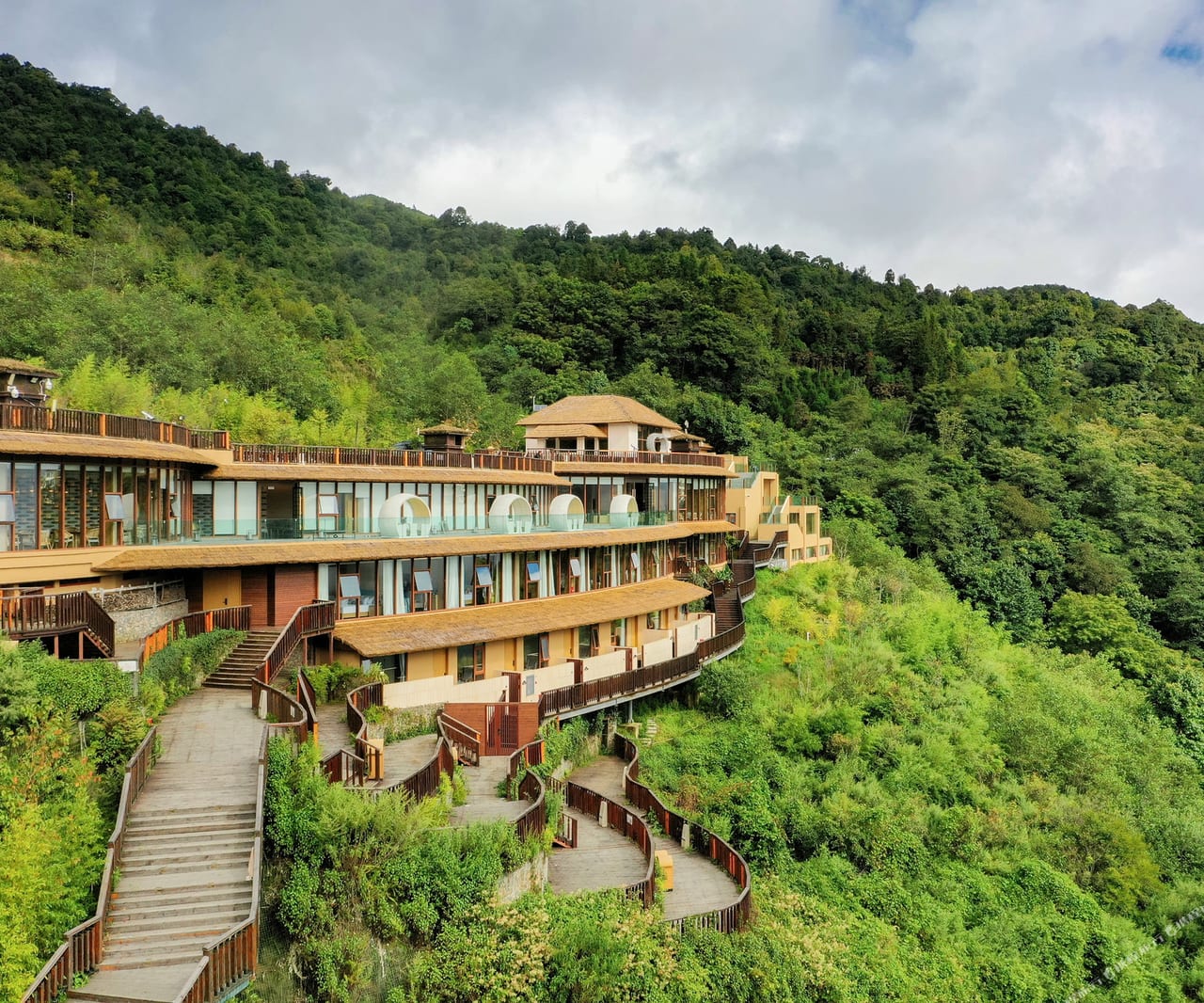
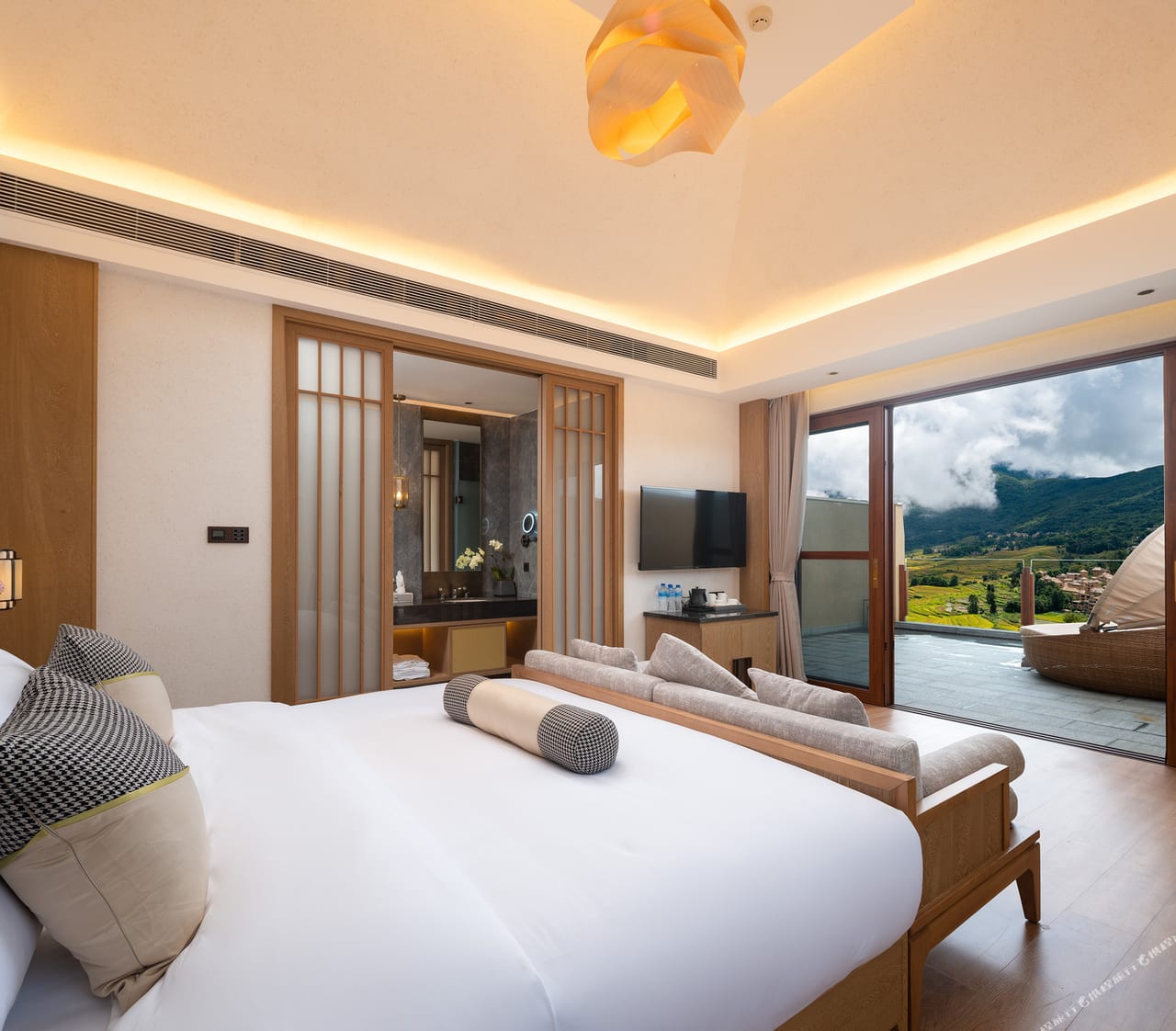
Twenty-six rooms stepping down the slope inside the Duoyishu scenic area, with a deck that connects to the sunrise viewpoint. Two nights on the terraces.
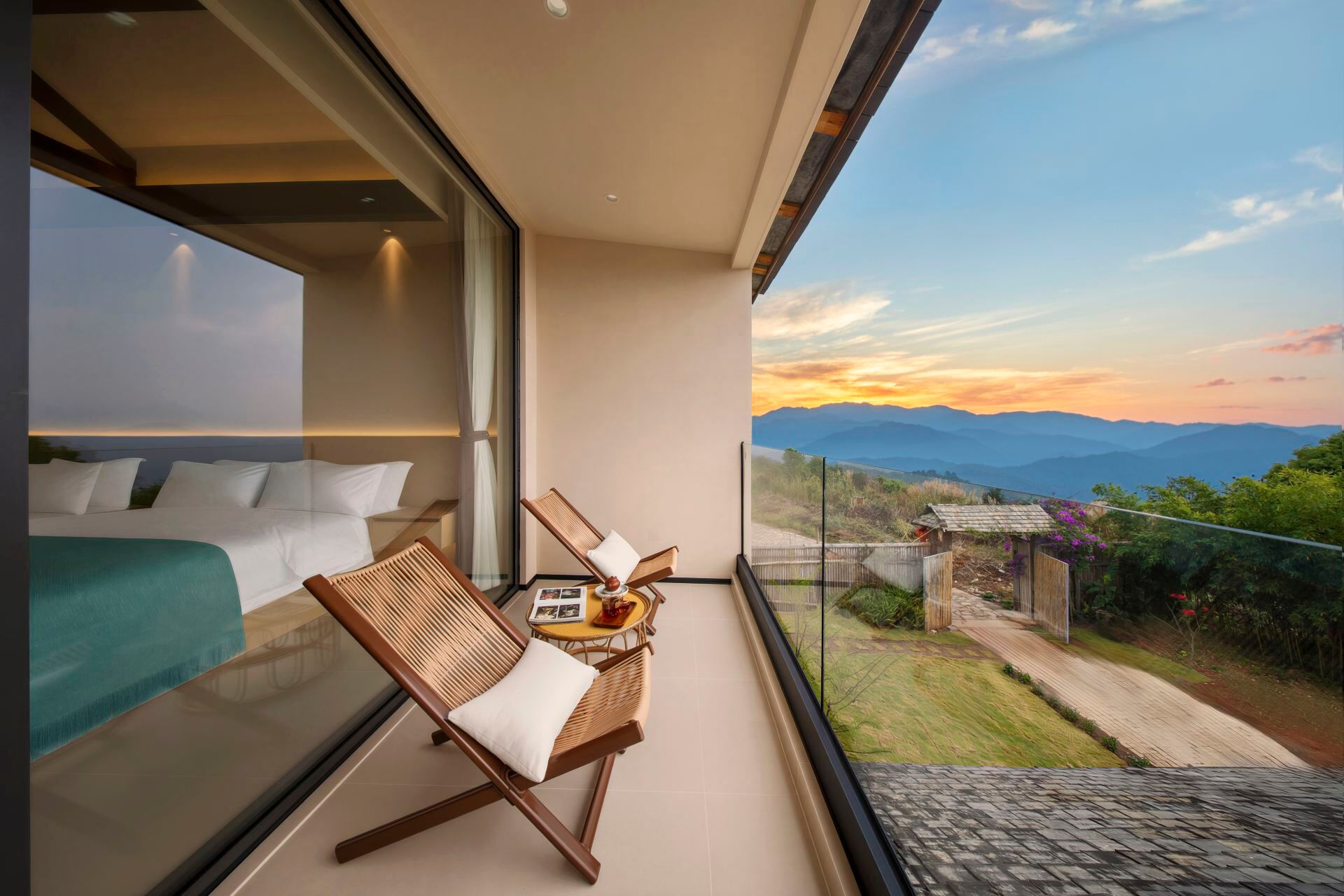
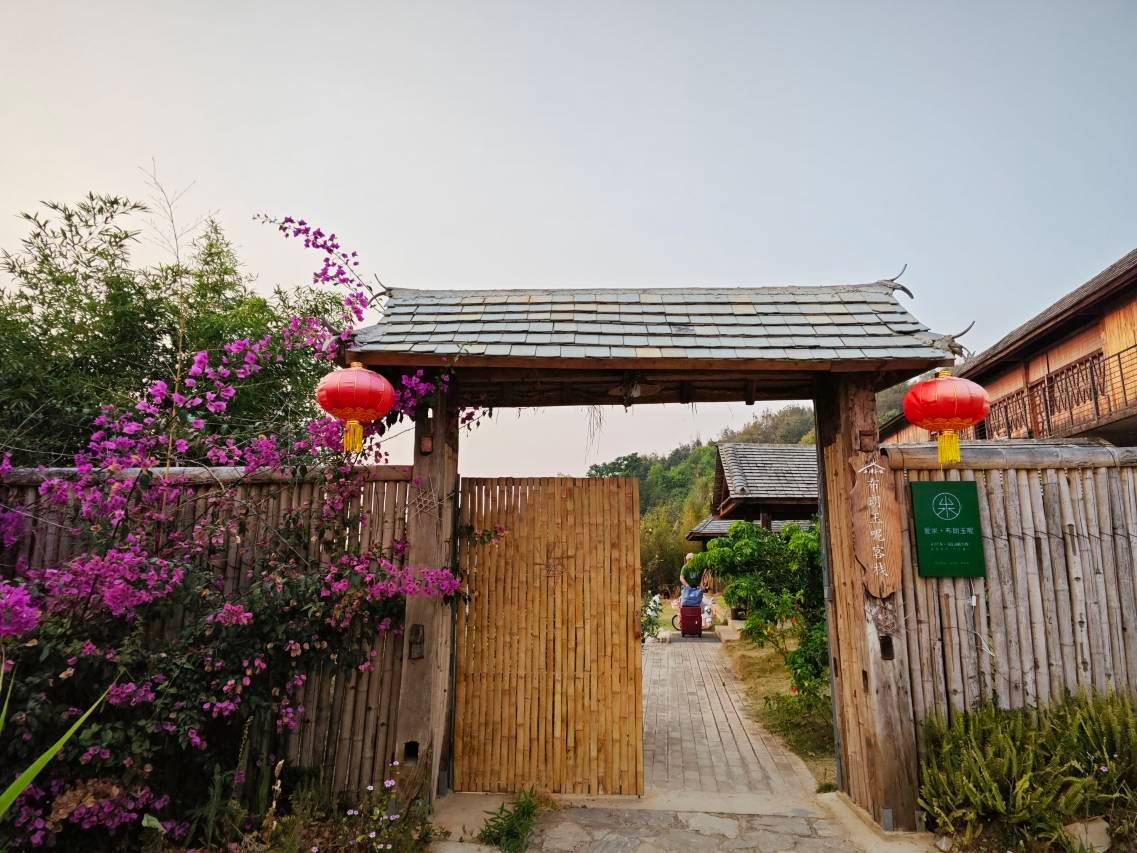
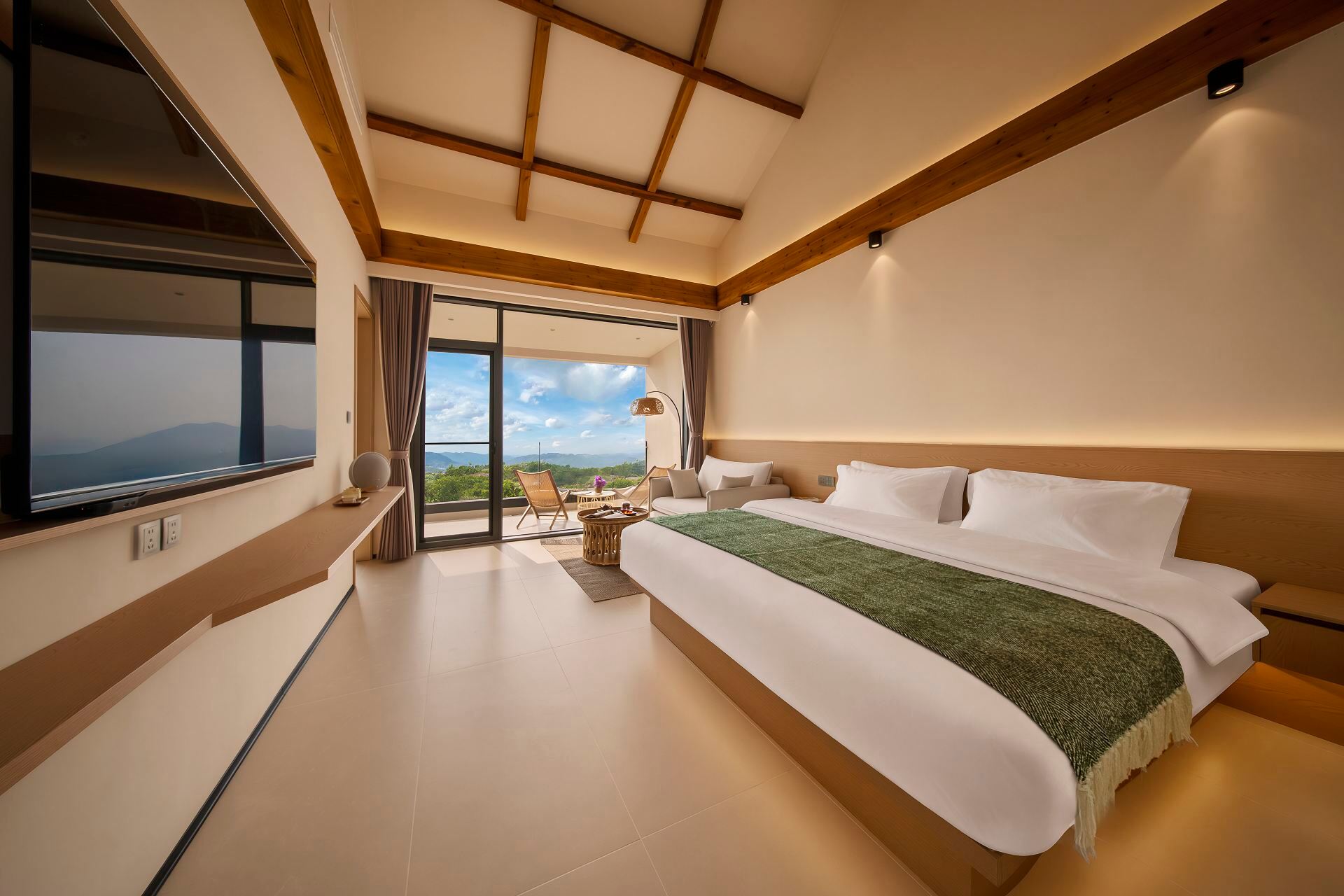
A family-run Bulang inn in Wengwa hamlet, chosen for the dinner table and the fire pit. One night in the tea forest.
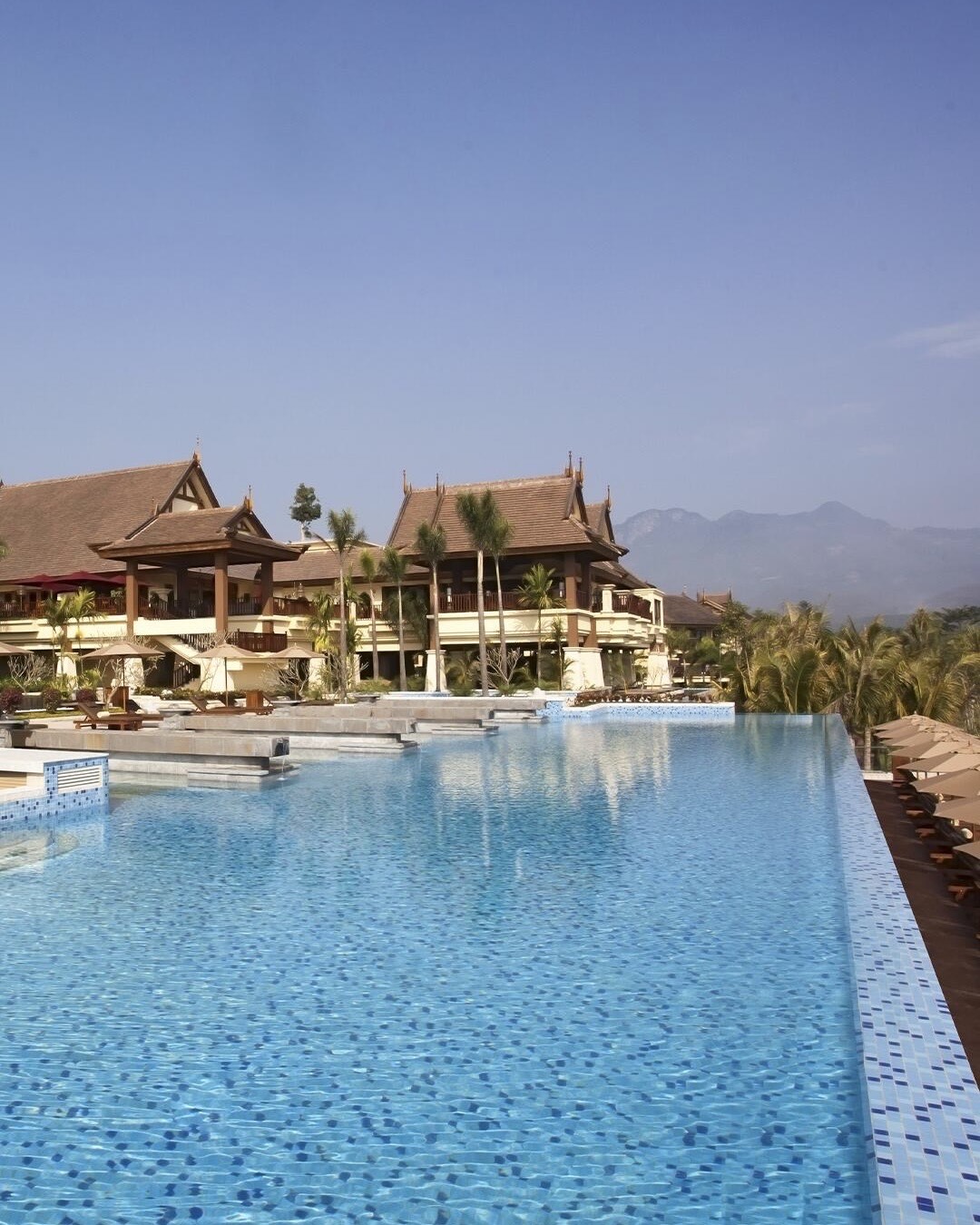
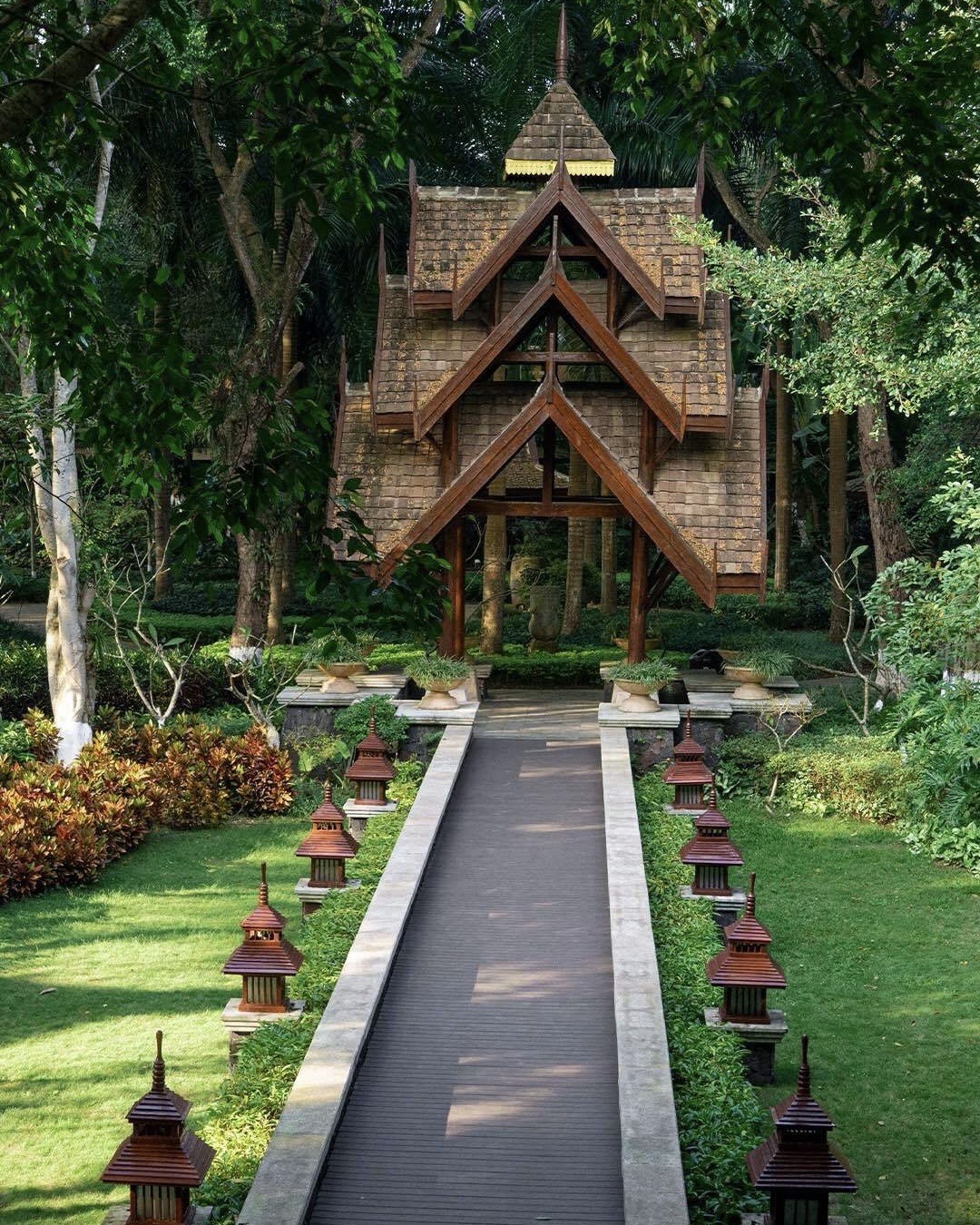
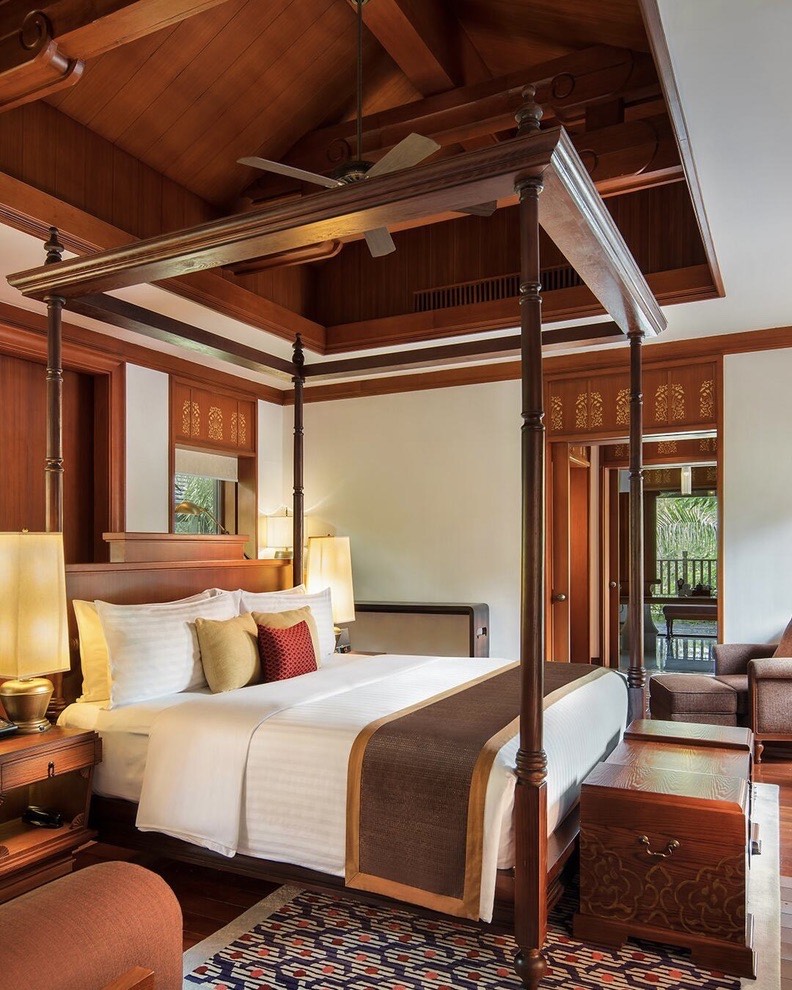
Private pool villas on a curve of the Luosuo River at Menglun, handy for the botanical garden. One night after the long drive down.
These are examples of the boutique stays we book across the route. Because boutique hotels have so few rooms, a stay may occasionally be swapped for one of similar standard.
Leave between about 15 February and mid-March. That gets you red kapok (February to about mid-March), the first 金雀花 from mid-February, 棠梨花 and 白花. The terraces peak from mid-November to mid-February and stay flooded into early March, so leave before about 1 March if the water matters most. In 2027 Spring Festival falls on 6 February, so avoid that week. From late March to mid-April it is a different trip: you can pick first-flush tea on Jingmai and find 香椿 and Anning's roses (peak mid-April), but the kapok is over and the terraces are no longer mirrors.
Not on the February to mid-March trip. No source puts picking on Jingmai before the last days of March, and we won't sell you a promise the trees can't keep. On this version you walk the tea forest, taste aged Pu'er, drink hearth-roasted tea and press a cake from last year's leaf. Choose a late-March or April departure if picking matters more than kapok. The itinerary says what changes on the Jingmai days.
It depends on the week, which is the point. Between mid-February and mid-March expect 棠梨花 (wild pear blossom), 金雀花 (golden sparrow flower, thin at first and plentiful in March), 木棉花 (kapok) and 白花 (Bauhinia). 香椿 (toon) comes along as a guest: it's a tree bud. Yunnan eats hundreds of edible kinds, but no market carries them all at once, so we don't print a fixed menu until the morning.
It is when they are bought from people who sell them for the table and cooked the way that table has always cooked them. Some Yunnan flowers need blanching and soaking first, and a local rhododendron is a known cause of spring poisoning, which is why nothing on this trip is picked up off a hillside or a roadside by guests. Your cooking class on Day 2 covers exactly this. Tell us about pollen or food allergies when you book.
Three days are long. Day 5 is about three hours from Jianshui to the terraces. Day 7 is five to six hours of mountain road to Pu'er, broken by the kapok stops and lunch. Day 9 is about 4.5 to 5 hours from Jingmai to Menglun. Everything else is either a two-hour train, a three-hour drive to Jingmai or no driving at all. You have your own vehicle and guide throughout, so stops are yours to call.
Every day, stay and date tailored to you — shaped over a call with someone who has walked the route, never a template.
Tell us your dates and what moves you. We reply within one business day, then shape a proposal — no obligation, never a templated package.
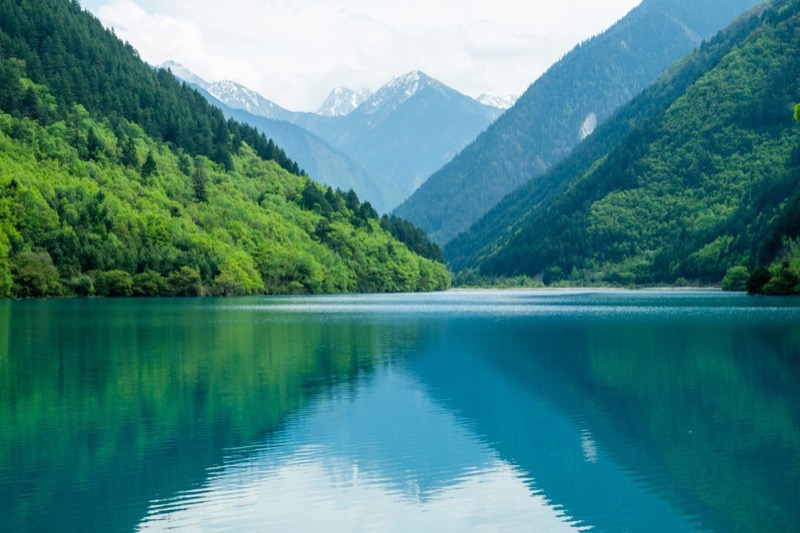
Giant Pandas at the Chengdu Research Base, then three days in the alpine lakes of Siguniang or Jiuzhai Valley. City culture first, mountain silence after.
See the itinerary →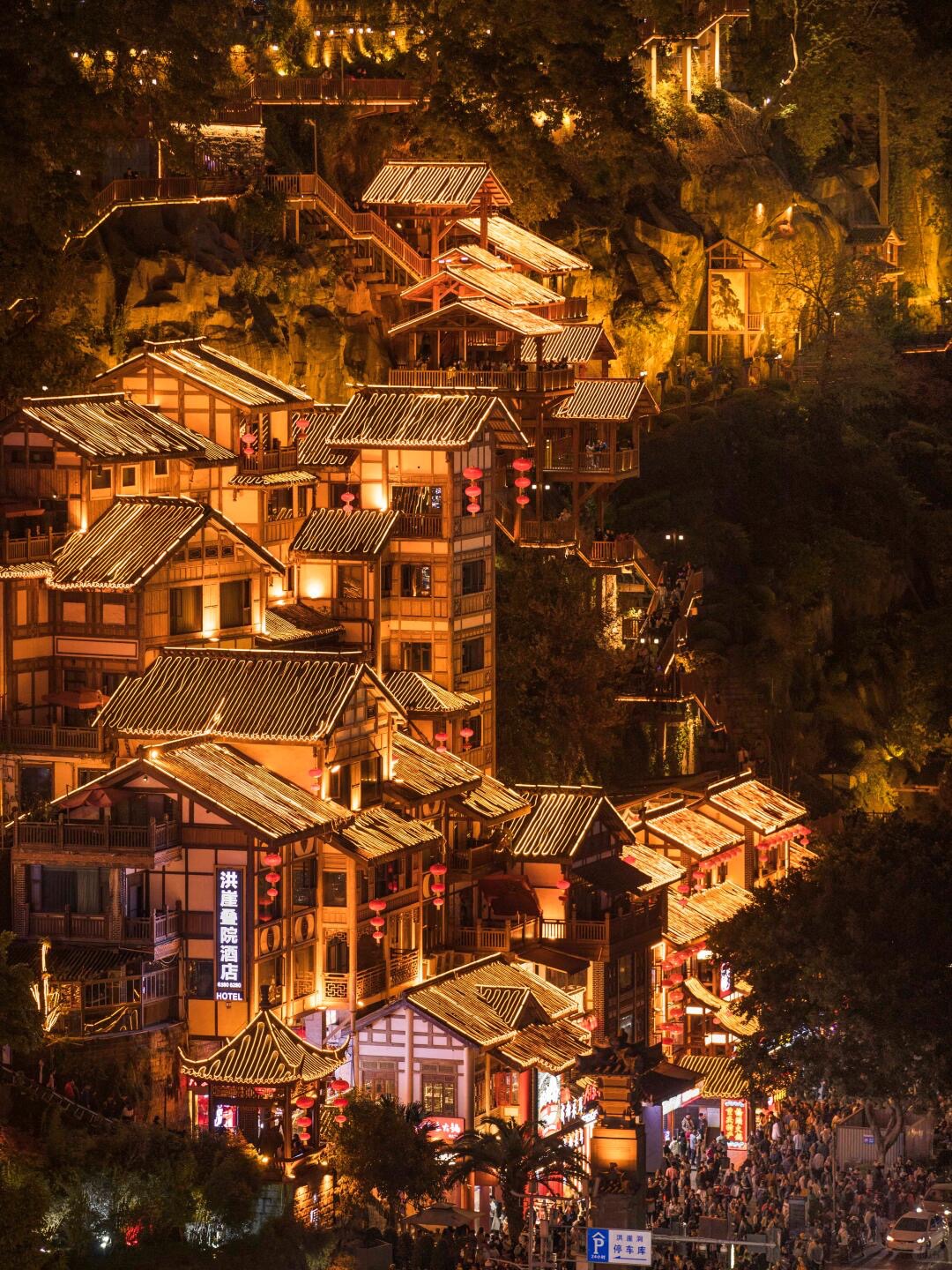
A 5–6 day private tour weighted toward Chongqing — neon river cities, UNESCO Wulong Karst, the Longji (Dragon's Backbone) ridge hike above the Yangtze, and two different tables of Sichuan heat. Bookended with a soft Chengdu landing.
See the itinerary →
Fifteen days that pair China's great icons with its wildlife and wild landscape — the Forbidden City and the quiet Great Wall at Jinshanling, the Terracotta Army, a working day with the giant pandas outside Chengdu, three days among Zhangjiajie's sandstone pillars, and Shanghai to finish. Private throughout.
See the itinerary →